
Types of Cooling Forming for Zirconia Ceramic Structural Components
User question: How can zirconia ceramic structural components solve my problem through cooling molding technology? What core requirements can it meet?
Answer: Zirconia ceramic structural components are widely used in precision machinery, medical implants, electronic devices, and other fields due to their high hardness, wear resistance, corrosion resistance, and excellent thermal stability. Cooling molding technology is directly related to the accuracy, strength, and service life of products, and can solve problems such as cracking, large dimensional deviations, and high costs in traditional processing methods, meeting your core needs for high performance, high reliability, and customized complex structures.
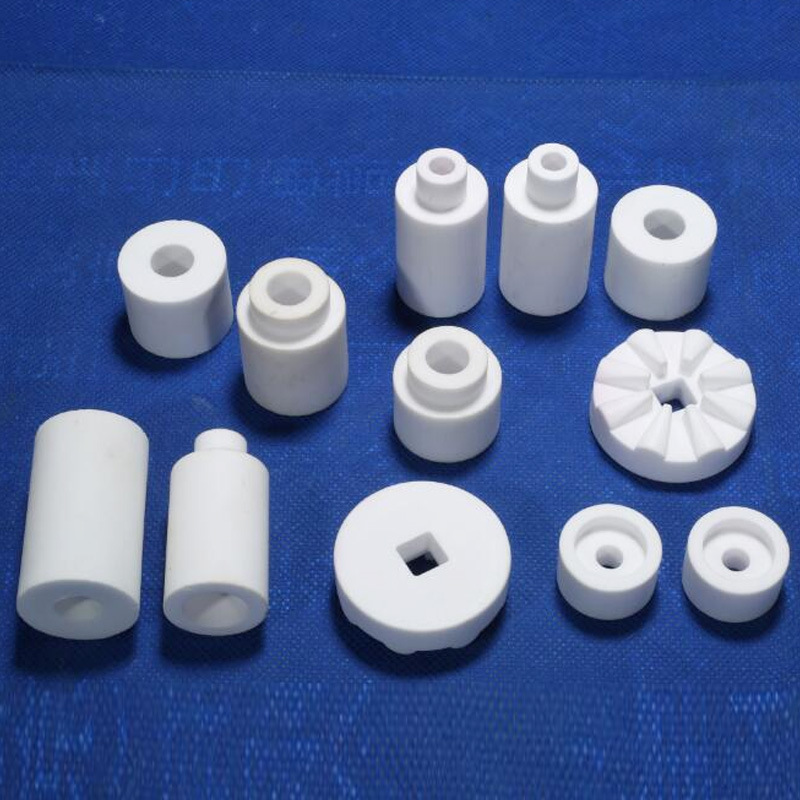
The main types of cooling forming for zirconia ceramic structural components
Cooling forming is a key process after sintering zirconia ceramics, which ensures product structural stability and performance optimization by controlling the cooling rate and method. It is mainly divided into the following categories:
- Natural cooling molding
-Process description: After sintering, it naturally cools down with the furnace, with a slow cooling rate, suitable for simple structural components.
-Product application: Ceramic bearings, standard bushings, and other products that are insensitive to thermal stress.
-Advantages: Low cost, simple operation, avoiding cracking caused by rapid cooling. - Controllable gradient cooling forming
-Process description: Control the cooling rate through a program and gradually cool down in stages (such as slow cooling in the high-temperature section and fast cooling in the low-temperature section).
-Product Applications: Medical implants such as dental implants, joint replacement devices, and high-precision valve components.
-Advantages: Reduce internal stress, improve product toughness and dimensional stability. - Rapid cooling forming (quenching process)
-Process description: Rapid cooling after sintering, usually used to improve surface hardness and wear resistance.
-Product applications: cutting tools, wear-resistant nozzles, textile ceramic parts.
-Advantages: Enhance surface density and extend wear resistance life. - Atmosphere protection cooling molding
-Process description: Cooling in inert atmospheres such as nitrogen and argon to prevent oxidation and contamination.
-Product applications: Semiconductor ceramic supports, fuel cell separators, and other electronic and new energy devices.
-Advantages: Maintaining surface purity and chemical stability, suitable for applications in high cleanliness environments.
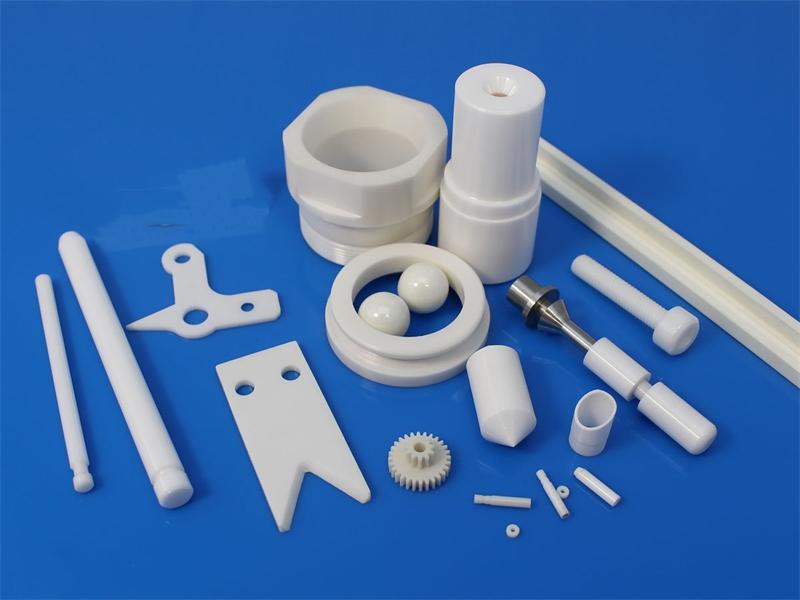
Why choose our zirconia ceramic cooling molding service?
technical advantage
-Adopting multi-stage gradient cooling technology, combined with simulation software to optimize the cooling curve, to ensure that the product has no hidden cracks and a deformation rate of less than 0.1%.
-Equipped with atmosphere protection kilns to meet medical and electronic grade high-purity requirements.
Customization capability for specifications and dimensions
-Support micrometer level precision machining, with a diameter range from 0.5mm to 500mm, and can customize complex shaped parts, porous structures, and thin-walled parts.
-Provide color customization (such as white, black, colored zirconia) to meet diverse design needs.
Core problem solved
-Insufficient accuracy: Cooling stress control technology ensures a dimensional tolerance of ± 0.01mm.
-Brittle cracking: Gradient cooling process enhances product fracture toughness (up to 10 MPa · m ¹/² or more).
-High cost: Integrated molding cooling reduces post-processing steps and lowers overall costs by over 30%.
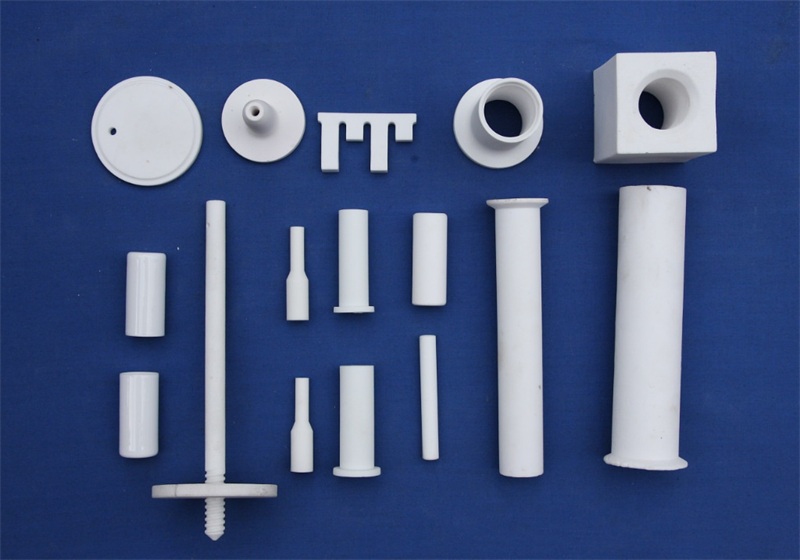
Customer Application Case (Anonymous)
-Case 1: A medical device enterprise customized dental implants, and through our gradient cooling molding, the product’s bending strength was increased to 1200MPa, with a clinical trial pass rate of 100%.
-Case 2: A certain optical equipment manufacturer uses rapidly cooled ceramic tube barrels, which increase wear resistance by three times and are suitable for high-temperature laser environments.
-Case 3: New energy battery companies customize ceramic sealing rings for atmosphere protection cooling, achieving zero leakage and a batch delivery yield of 99.5%.
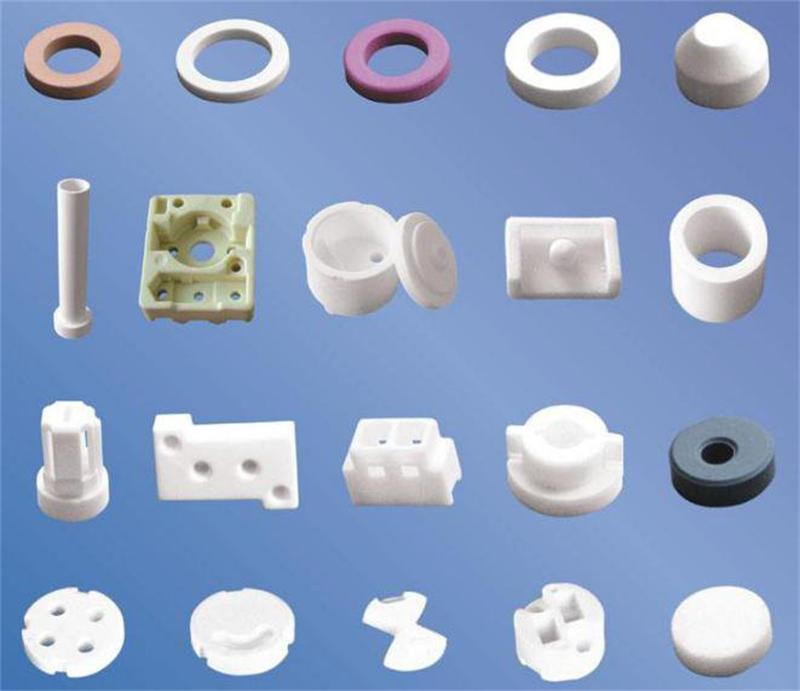
Do you need customized zirconia ceramic structural components? Welcome to contact us for samples and technical solutions, providing high-performance ceramic solutions for your project!
Brudeze Ceramics supplies and sells a wide range of high-quality quartz glass, including alumina ceramics, zirconia ceramics, silicon nitride ceramics, aluminum nitride ceramics, silicon carbide ceramics, boron carbide ceramics, bioceramics, machinable ceramics, etc. We can meet the customization requirements of various ceramic products.
PREVIOUS:What cutting tools are used to process zirconia ceramics
NEXT:Customized manufacturer of zirconia ceramic structural components
CATEGORIES
LATEST NEWS
- Which is more wear-resistan...
- Are microcrystalline cerami...
- What is the difference betw...
- Compared to ordinary cerami...
- What are the main material ...
- Large sized microcrystallin...
- What is the maximum operati...
- Low dielectric constant mic...
- High hardness and wear-resi...
- Low expansion microcrystall...