
Applications of zirconia ceramics in the aerospace industry
The application of zirconia ceramics in the aerospace field covers multiple dimensions such as thermal protection coatings, structural components, electrical insulation devices, and space manufacturing. Its unique phase transition toughening mechanism, extremely low thermal conductivity (as low as 0.019W/m · K), and long-term temperature resistance of up to 2300 ℃ make it an ideal choice for extreme environments such as hypersonic vehicles, satellite propulsion systems, and deep space probes.
Q: How to protect the internal structure of hypersonic aircraft facing aerodynamic heating above 2000 ℃?
Answer: Zirconia ceramic thermal barrier coatings (TBCs) and zirconia fiber aerogel thermal insulation materials can be used for a long time at 2300 ℃, with a thermal conductivity of only 0.019W/m · K, effectively blocking heat transfer and ensuring the safety of equipment and personnel inside the aircraft.
Q: How to solve the corrosion and electrolyte reflux problems faced by spacecraft battery packs in the space environment?
Answer: Zirconia coating has excellent corrosion resistance and electrical insulation properties, successfully solving the problems of corrosion resistance and electrolyte reflux in nickel hydrogen battery packs, and providing guarantees for extending the service life of spacecraft in orbit.
Q: The long-term operation of the space station requires a large number of spare parts. How to solve the difficulty of supply?
Answer: Using space 3D printing technology with ceramic materials such as zirconia, various ceramic parts and tools can be quickly manufactured in orbit, achieving “space manufacturing” and reducing ground launch supply costs.
Q: The nuclear power system for deep space exploration needs to be insulated for a long time at a high temperature of 1000 ℃ and cannot produce excessive substances. What are the solutions?
Answer: The zirconia particle lattice high-temperature multi-layer insulation component prepared by atmospheric plasma spraying technology can withstand a high temperature of 1000 ℃ for a long time, with small edge heat leakage and no excess material, meeting the demanding insulation requirements of RTPV nuclear power sources.
The reason why zirconia ceramics have become the “star materials” in the aerospace industry is due to their unique comprehensive properties:
-Excellent mechanical properties: By stabilizing with yttrium oxide (Y ₂ O3), zirconia ceramics can achieve phase transformation toughening and fracture toughness far higher than other structural ceramics. Research has shown that 3YSZ (3mol% yttria stabilized zirconia) has the best anti cavitation performance and microstructure density.
-Extremely low thermal conductivity: the thermal conductivity of zirconia ceramic nanofiber aerogel is as low as 0.019W/m · K, and its thermal insulation performance is comparable to that of Aspen aerogel, a special material for space probes in the United States.
-Excellent high-temperature stability: It can serve for a long time at 2300 ℃ and has shape memory characteristics – even after 1000 compressions at 1000 ℃, the rebound rate is still greater than 80%.
-Electrical insulation and non-magnetic characteristics: high resistivity, no magnetic interference, suitable for precision electronic equipment in spacecraft.
-Anti cavitation and erosion resistance: Under high-speed airflow and cavitation conditions, zirconia coatings exhibit excellent fatigue resistance, with a cavitation incubation period of up to 11 hours and minimal quality loss.
Specific applications in the field of aerospace and aviation
- Thermal protection and insulation system
During the re-entry process of hypersonic and reusable spacecraft, the aerodynamic heating temperature can reach over 1500-2000 ℃. The application of zirconia ceramics is mainly reflected in:
-Fiber like zirconia ceramic insulation material: With low density, high temperature stability, and low thermal conductivity, it has become an alternative material in high-temperature and harsh environments. The MoSi ₂ – ZrO2 ₂ – BSG multiphase coating system prepared by the research team on its surface has an emissivity of 0.85-1500 ℃ in the 0.3-2.5 μ m band, and a weight loss rate of only 1.81% after 10 room temperature thermal cycles.
-Zirconia thermal barrier coating: applied to high-temperature components such as engine nozzles and combustion chambers, effectively reducing the temperature of the base metal and improving engine thrust and efficiency. - Spacecraft power system
The zirconia coating developed by Shanghai Institute of Ceramics has been successfully applied to the hydrogen nickel battery pack of “Tiangong-1” and “Shenzhou-8”, solving the problems of corrosion resistance and electrolyte reflux, and providing key guarantees for extending the service life of spacecraft in orbit.
In deep space exploration of RTPV (isotope thermal photovoltaic) nuclear power sources, ZrO ₂ particle lattice high-temperature multi-layer insulation components prepared by atmospheric plasma spraying can work for a long time at a high temperature of 1000 ℃, with the characteristics of small edge heat leakage and no excess material production. - In orbit manufacturing in space
The Chinese Academy of Sciences has successfully carried out space 3D printing ceramic special materials loading experiments through the return capsule of Shenzhou-11 spacecraft. Zirconia, as one of the key materials, can be used in future space stations to rapidly manufacture various ceramic parts and tools, providing maintenance support for equipment inside and outside the spacecraft. - Anti cavitation components
Zirconia ceramics (especially 3YSZ) are used in components such as fuel pumps and valves that withstand high-speed fluid impacts due to their excellent anti cavitation performance. Research has shown that the cavitation incubation period of 3YSZ-C (containing carbon) is as long as 11 hours, and the mass loss after 12 hours of cavitation is only 0.1mg. - Precision structural components
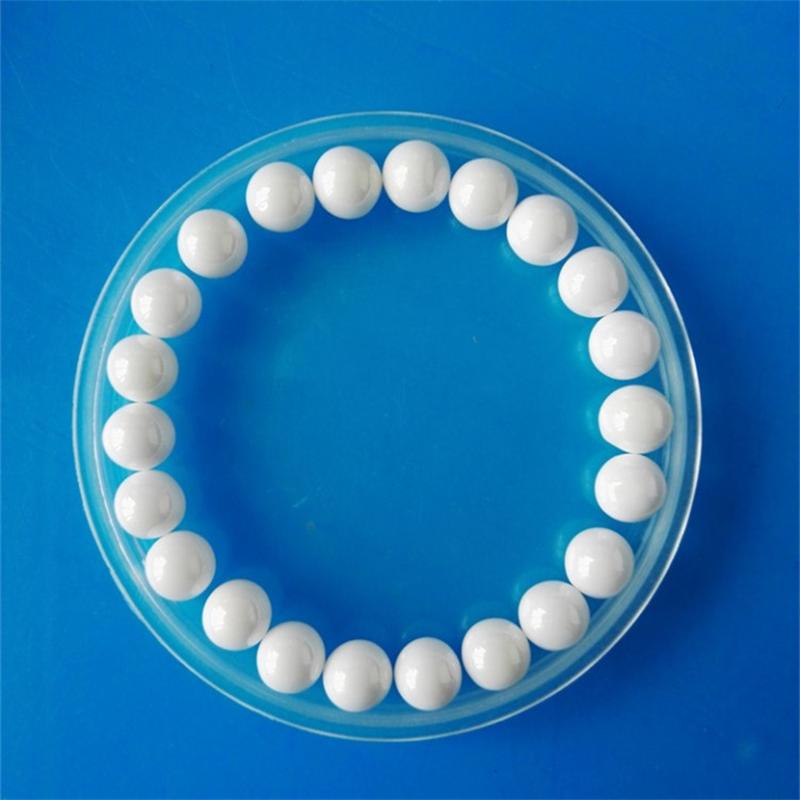
The high strength and hardness characteristics of zirconia ceramics make them suitable for manufacturing precision structural components such as bearings, sealing rings, fasteners, etc. Although Lixing Corporation is currently developing silicon nitride ceramic balls, zirconia ceramic balls also have potential applications in extreme scenarios such as hypersonic aircraft.
Customization service for specifications and dimensions
Applications in the aerospace industry often require “tailor-made” services, and we provide full process customization services:
-Material system customization: Different Y ₂ O ∝ doping levels (3YSZ, 5YSZ, 8YSZ, etc.) and composite modification schemes can be selected according to requirements.
-Customization of Forming Process: Supports various processes such as dry pressing, isostatic pressing, injection molding, and hot die casting to meet the preparation needs of complex shaped components.
-Coating preparation services: We provide various coating preparation processes such as atmospheric plasma spraying (APS), vacuum plasma spraying (VPS), physical vapor deposition (PVD), etc.
-Customization of fiber/aerogel: Zirconia fiber membrane and aerogel materials with different densities (50-100kg/m ³) and different thicknesses can be customized.
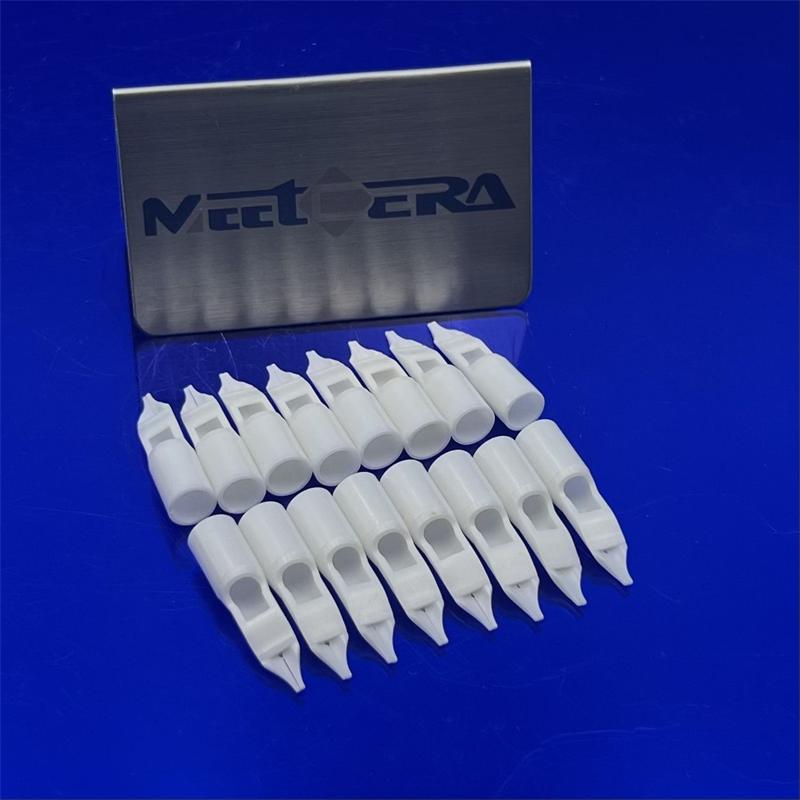
-Precision machining: Equipped with a five axis linkage machining center, it can achieve precision grinding of complex ceramic components with a dimensional accuracy of ± 0.005mm.
Customer Application Cases
Case: Thermal Barrier Coating Challenge for a Hypersonic Aircraft Thermal Protection System Supplier
-Customer requirement: The new hypersonic aircraft developed by the customer has an engine nozzle and wing leading edge that operates at temperatures exceeding 2000 ℃ and can withstand strong erosion from high-speed airflow. Traditional YSZ thermal barrier coatings undergo phase transformation and sintering above 1500 ℃, resulting in coating peeling and failure. We urgently need a new type of thermal barrier coating material with lower thermal conductivity, better phase stability, and stronger resistance to erosion.
-Solution: We have customized and developed a rare earth doped zirconia multilayer gradient coating solution for our customers
-Material design: Adopting Gd ₂ O ∝ – Yb ₂ O ∝ – YSZ multi-element rare earth co doping system, significantly suppressing high-temperature phase transition and reducing thermal conductivity
-Structural design: Adopting a double-layer structure – the bottom layer is a dense bonding layer, and the surface layer is a columnar crystal structure thermal barrier layer
-Process optimization: Achieving controllable microstructure of coatings through plasma spraying physical vapor deposition (PS-PVD) composite process
-Size customization: Developed specialized spraying fixtures and trajectory programs for customers’ nozzle components with irregular structures
-Final effect:
-Temperature resistance improvement: The coating has stable service for over 200 hours in a 2200 ℃ gas scouring environment without peeling or failure
-Thermal conductivity reduction: The thermal conductivity of the coating is reduced by 40% compared to traditional YSZ, and the substrate temperature is reduced by 150 ℃
-Excellent thermal shock resistance: After 500 cycles of rapid cooling and heating from 1500 ℃ to room temperature, the coating quality loss is less than 1%
-Project delivery: Successfully assisted the customer in completing the ground test of the hypersonic aircraft prototype, and has now entered the engineering application stage
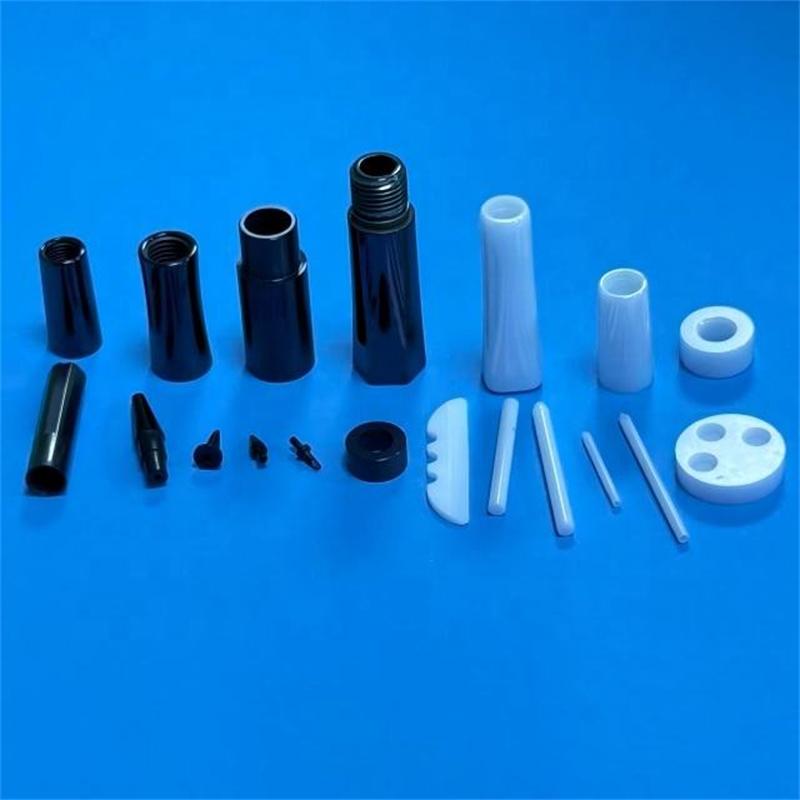
From thermal protection for hypersonic aircraft to space manufacturing for space stations, zirconia ceramics are redefining the performance boundaries of aerospace materials. If you are developing a new generation of spacecraft, engines, or thermal protection systems, you need ceramic material solutions that are resistant to high temperatures, thermal insulation, and erosion.
Brudeze Ceramics supplies and sells a wide range of high-quality quartz glass, including alumina ceramics, zirconia ceramics, silicon nitride ceramics, aluminum nitride ceramics, silicon carbide ceramics, boron carbide ceramics, bioceramics, machinable ceramics, etc. We can meet the customization requirements of various ceramic products.The application of zirconia ceramics in the aerospace field covers multiple dimensions such as thermal protection coatings, structural components, electrical insulation devices, and space manufacturing. Its unique phase transition toughening mechanism, extremely low thermal conductivity (as low as 0.019W/m · K), and long-term temperature resistance of up to 2300 ℃ make it an ideal choice for extreme environments such as hypersonic vehicles, satellite propulsion systems, and deep space probes.
Q: How to protect the internal structure of hypersonic aircraft facing aerodynamic heating above 2000 ℃?
Answer: Zirconia ceramic thermal barrier coatings (TBCs) and zirconia fiber aerogel thermal insulation materials can be used for a long time at 2300 ℃, with a thermal conductivity of only 0.019W/m · K, effectively blocking heat transfer and ensuring the safety of equipment and personnel inside the aircraft.
Q: How to solve the corrosion and electrolyte reflux problems faced by spacecraft battery packs in the space environment?
Answer: Zirconia coating has excellent corrosion resistance and electrical insulation properties, successfully solving the problems of corrosion resistance and electrolyte reflux in nickel hydrogen battery packs, and providing guarantees for extending the service life of spacecraft in orbit.
Q: The long-term operation of the space station requires a large number of spare parts. How to solve the difficulty of supply?
Answer: Using space 3D printing technology with ceramic materials such as zirconia, various ceramic parts and tools can be quickly manufactured in orbit, achieving “space manufacturing” and reducing ground launch supply costs.
Q: The nuclear power system for deep space exploration needs to be insulated for a long time at a high temperature of 1000 ℃ and cannot produce excessive substances. What are the solutions?
Answer: The zirconia particle lattice high-temperature multi-layer insulation component prepared by atmospheric plasma spraying technology can withstand a high temperature of 1000 ℃ for a long time, with small edge heat leakage and no excess material, meeting the demanding insulation requirements of RTPV nuclear power sources.
The reason why zirconia ceramics have become the “star materials” in the aerospace industry is due to their unique comprehensive properties:
-Excellent mechanical properties: By stabilizing with yttrium oxide (Y ₂ O3), zirconia ceramics can achieve phase transformation toughening and fracture toughness far higher than other structural ceramics. Research has shown that 3YSZ (3mol% yttria stabilized zirconia) has the best anti cavitation performance and microstructure density.
-Extremely low thermal conductivity: the thermal conductivity of zirconia ceramic nanofiber aerogel is as low as 0.019W/m · K, and its thermal insulation performance is comparable to that of Aspen aerogel, a special material for space probes in the United States.
-Excellent high-temperature stability: It can serve for a long time at 2300 ℃ and has shape memory characteristics – even after 1000 compressions at 1000 ℃, the rebound rate is still greater than 80%.
-Electrical insulation and non-magnetic characteristics: high resistivity, no magnetic interference, suitable for precision electronic equipment in spacecraft.
-Anti cavitation and erosion resistance: Under high-speed airflow and cavitation conditions, zirconia coatings exhibit excellent fatigue resistance, with a cavitation incubation period of up to 11 hours and minimal quality loss.
Specific applications in the field of aerospace and aviation
- Thermal protection and insulation system
During the re-entry process of hypersonic and reusable spacecraft, the aerodynamic heating temperature can reach over 1500-2000 ℃. The application of zirconia ceramics is mainly reflected in:
-Fiber like zirconia ceramic insulation material: With low density, high temperature stability, and low thermal conductivity, it has become an alternative material in high-temperature and harsh environments. The MoSi ₂ – ZrO2 ₂ – BSG multiphase coating system prepared by the research team on its surface has an emissivity of 0.85-1500 ℃ in the 0.3-2.5 μ m band, and a weight loss rate of only 1.81% after 10 room temperature thermal cycles.
-Zirconia thermal barrier coating: applied to high-temperature components such as engine nozzles and combustion chambers, effectively reducing the temperature of the base metal and improving engine thrust and efficiency. - Spacecraft power system
The zirconia coating developed by Shanghai Institute of Ceramics has been successfully applied to the hydrogen nickel battery pack of “Tiangong-1” and “Shenzhou-8”, solving the problems of corrosion resistance and electrolyte reflux, and providing key guarantees for extending the service life of spacecraft in orbit.
In deep space exploration of RTPV (isotope thermal photovoltaic) nuclear power sources, ZrO ₂ particle lattice high-temperature multi-layer insulation components prepared by atmospheric plasma spraying can work for a long time at a high temperature of 1000 ℃, with the characteristics of small edge heat leakage and no excess material production. - In orbit manufacturing in space
The Chinese Academy of Sciences has successfully carried out space 3D printing ceramic special materials loading experiments through the return capsule of Shenzhou-11 spacecraft. Zirconia, as one of the key materials, can be used in future space stations to rapidly manufacture various ceramic parts and tools, providing maintenance support for equipment inside and outside the spacecraft. - Anti cavitation components
Zirconia ceramics (especially 3YSZ) are used in components such as fuel pumps and valves that withstand high-speed fluid impacts due to their excellent anti cavitation performance. Research has shown that the cavitation incubation period of 3YSZ-C (containing carbon) is as long as 11 hours, and the mass loss after 12 hours of cavitation is only 0.1mg. - Precision structural components
The high strength and hardness characteristics of zirconia ceramics make them suitable for manufacturing precision structural components such as bearings, sealing rings, fasteners, etc. Although Lixing Corporation is currently developing silicon nitride ceramic balls, zirconia ceramic balls also have potential applications in extreme scenarios such as hypersonic aircraft.
Customization service for specifications and dimensions
Applications in the aerospace industry often require “tailor-made” services, and we provide full process customization services:
-Material system customization: Different Y ₂ O ∝ doping levels (3YSZ, 5YSZ, 8YSZ, etc.) and composite modification schemes can be selected according to requirements.
-Customization of Forming Process: Supports various processes such as dry pressing, isostatic pressing, injection molding, and hot die casting to meet the preparation needs of complex shaped components.
-Coating preparation services: We provide various coating preparation processes such as atmospheric plasma spraying (APS), vacuum plasma spraying (VPS), physical vapor deposition (PVD), etc.
-Customization of fiber/aerogel: Zirconia fiber membrane and aerogel materials with different densities (50-100kg/m ³) and different thicknesses can be customized.
-Precision machining: Equipped with a five axis linkage machining center, it can achieve precision grinding of complex ceramic components with a dimensional accuracy of ± 0.005mm.
Customer Application Cases
Case: Thermal Barrier Coating Challenge for a Hypersonic Aircraft Thermal Protection System Supplier
-Customer requirement: The new hypersonic aircraft developed by the customer has an engine nozzle and wing leading edge that operates at temperatures exceeding 2000 ℃ and can withstand strong erosion from high-speed airflow. Traditional YSZ thermal barrier coatings undergo phase transformation and sintering above 1500 ℃, resulting in coating peeling and failure. We urgently need a new type of thermal barrier coating material with lower thermal conductivity, better phase stability, and stronger resistance to erosion.
-Solution: We have customized and developed a rare earth doped zirconia multilayer gradient coating solution for our customers
-Material design: Adopting Gd ₂ O ∝ – Yb ₂ O ∝ – YSZ multi-element rare earth co doping system, significantly suppressing high-temperature phase transition and reducing thermal conductivity
-Structural design: Adopting a double-layer structure – the bottom layer is a dense bonding layer, and the surface layer is a columnar crystal structure thermal barrier layer
-Process optimization: Achieving controllable microstructure of coatings through plasma spraying physical vapor deposition (PS-PVD) composite process
-Size customization: Developed specialized spraying fixtures and trajectory programs for customers’ nozzle components with irregular structures
-Final effect:
-Temperature resistance improvement: The coating has stable service for over 200 hours in a 2200 ℃ gas scouring environment without peeling or failure
-Thermal conductivity reduction: The thermal conductivity of the coating is reduced by 40% compared to traditional YSZ, and the substrate temperature is reduced by 150 ℃
-Excellent thermal shock resistance: After 500 cycles of rapid cooling and heating from 1500 ℃ to room temperature, the coating quality loss is less than 1%
-Project delivery: Successfully assisted the customer in completing the ground test of the hypersonic aircraft prototype, and has now entered the engineering application stage
From thermal protection for hypersonic aircraft to space manufacturing for space stations, zirconia ceramics are redefining the performance boundaries of aerospace materials. If you are developing a new generation of spacecraft, engines, or thermal protection systems, you need ceramic material solutions that are resistant to high temperatures, thermal insulation, and erosion.
Brudeze Ceramics supplies and sells a wide range of high-quality quartz glass, including alumina ceramics, zirconia ceramics, silicon nitride ceramics, aluminum nitride ceramics, silicon carbide ceramics, boron carbide ceramics, bioceramics, machinable ceramics, etc. We can meet the customization requirements of various ceramic products.
Tags: boron carbide ceramics
PREVIOUS:Application of zirconia ceramics in refractory field
NEXT:Application of Zirconia Ceramics in the Nuclear Industry
CATEGORIES
LATEST NEWS
- Which is more wear-resistan...
- Are microcrystalline cerami...
- What is the difference betw...
- Compared to ordinary cerami...
- What are the main material ...
- Large sized microcrystallin...
- What is the maximum operati...
- Low dielectric constant mic...
- High hardness and wear-resi...
- Low expansion microcrystall...