
Application of zirconia ceramics in refractory field
Today, in the pursuit of ultimate efficiency and green transformation in high-temperature industry, zirconia ceramics (ZrO ₂) are not only a refractory material, but also known as the “vitamin of high-temperature industry”. With its melting point of up to 2700 ℃, unique phase transformation toughening mechanism, and extremely strong chemical inertness, zirconia can endow refractory materials with unparalleled thermal shock resistance, slag corrosion resistance, and high-temperature structural strength. From steel continuous casting to glass melting, from cement rotary kilns to sapphire blast furnaces, zirconia ceramics are reshaping the core performance and lifespan of modern industrial kilns.
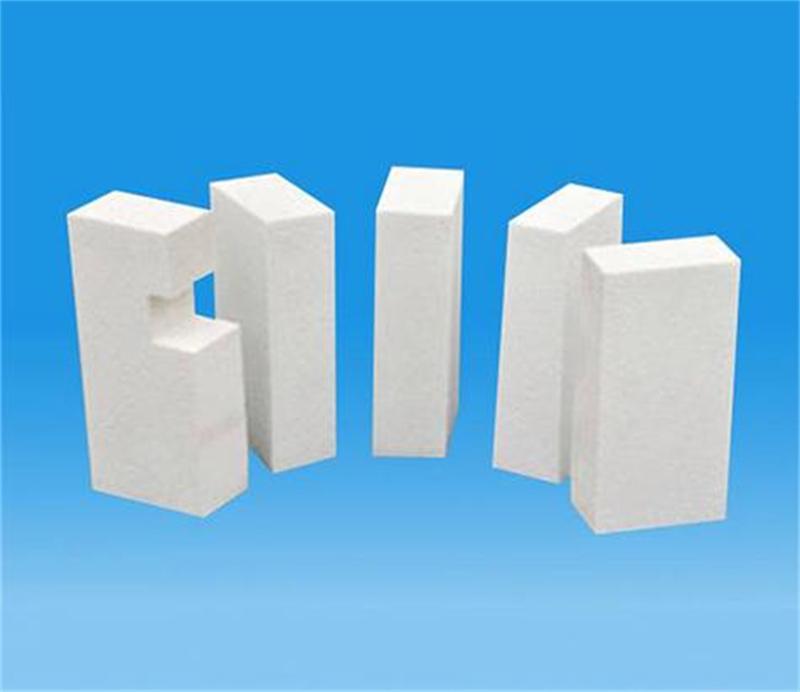
What challenges can zirconia refractory materials solve for you?
Q1: What should be done if the furnace lining material is prone to cracking and peeling off in a rapid cooling and heating environment, resulting in work stoppage?
A: Zirconia ceramics utilize their “phase transition toughening” properties to absorb stress through microstructure during thermal impact, effectively suppressing crack propagation, improving thermal shock stability by more than 30%, and significantly reducing peel loss.
Q2: How to solve the problem of high temperature slag and glass liquid being too corrosive to refractory materials and having a short service life?
A: Zirconia has extremely high chemical inertness towards molten metals, glass liquids, and acidic/alkaline slag, especially at temperatures below 2000 ℃ where it hardly reacts with most media, making it the best barrier against erosion.
Q3: Under ultra-high temperature (>1800 ℃) conditions, ordinary materials are prone to volatile pollution of products. How to ensure purity?
A: High purity zirconia products have extremely low volatility in ultra-high temperature vacuum environments and no free oxide pollution, which can meet the strict requirements for purity of high-precision products such as sapphire crystals and special glass.
Q4: The energy consumption of the kiln is too high. Is there a solution that can withstand high temperatures and provide insulation?
A: Zirconia ceramics themselves have a low thermal conductivity (only about 2.09W/(m · K) at 1000 ℃). By making zirconia hollow sphere bricks and other forms, efficient insulation can be achieved while ensuring high temperature resistance, helping kilns save energy and reduce consumption.
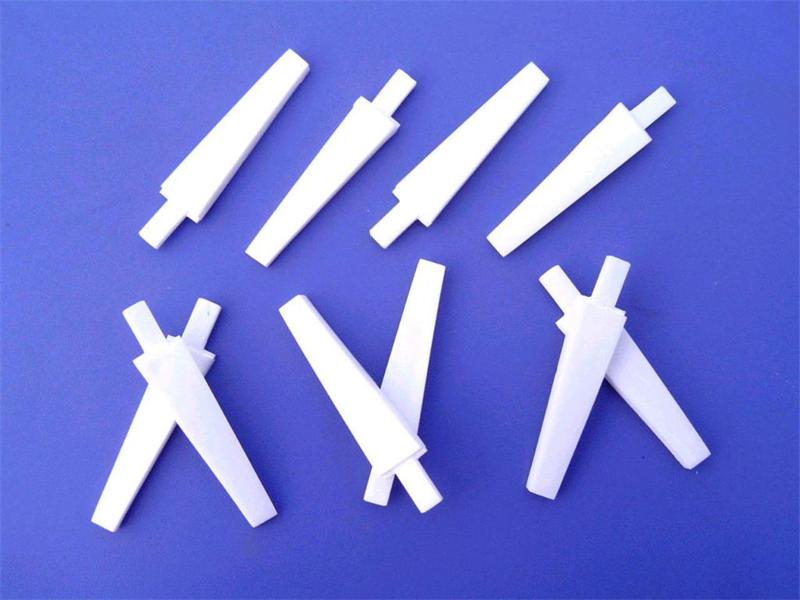
Product application areas
Zirconia refractory materials have deeply penetrated into various aspects of high-temperature industry:
-Steel industry: slag line parts of the “three major components” of continuous casting (immersion nozzle, long nozzle, sliding plate), magnesium aluminum zirconium bricks lining the ladle, sliding plate, etc.
-Glass industry: fused zirconia corundum bricks (AZS) and fused high-purity zirconia bricks are used for the walls of glass melting furnaces and flow holes.
-Cement industry: Rotary kiln firing of chromium free alkaline bricks in the transition zone (such as magnesia zirconia bricks and magnesia dolomite bricks containing zirconium).
-Cutting edge technology: sapphire crystal furnace lining, crucible for melting high melting point metals (such as tungsten, molybdenum, titanium), quartz glass melting furnace.
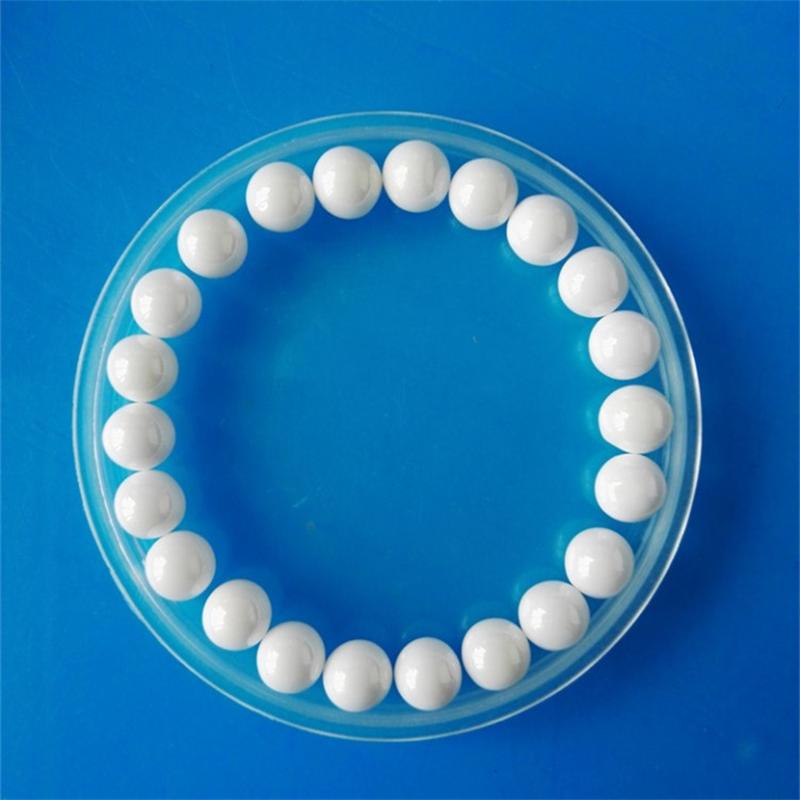
Core advantages of the product
- Ultra high temperature stability: Pure zirconia has a melting point of up to 2700 ℃, and with the addition of stabilizers, it can be used for a long time at 2200 ℃ -2500 ℃, with extremely low high-temperature creep rate.
- Phase transformation toughening technology: Utilizing the volume effect generated by the phase transition between monoclinic and tetragonal phases, a micro crack network is formed inside the material, effectively buffering thermal stress. This is the core killer of zirconia compared to other refractory materials.
- Extremely low erosion rate: Its corrosion resistance to glass liquid and steel slag far exceeds that of traditional corundum materials, which can significantly extend the service life of kilns and reduce the frequency of cold repairs.
- Environmentally friendly and chromium free: As an ideal substitute for magnesia chrome bricks in cement kilns, it completely eliminates hexavalent chromium pollution and conforms to the trend of green industry development.
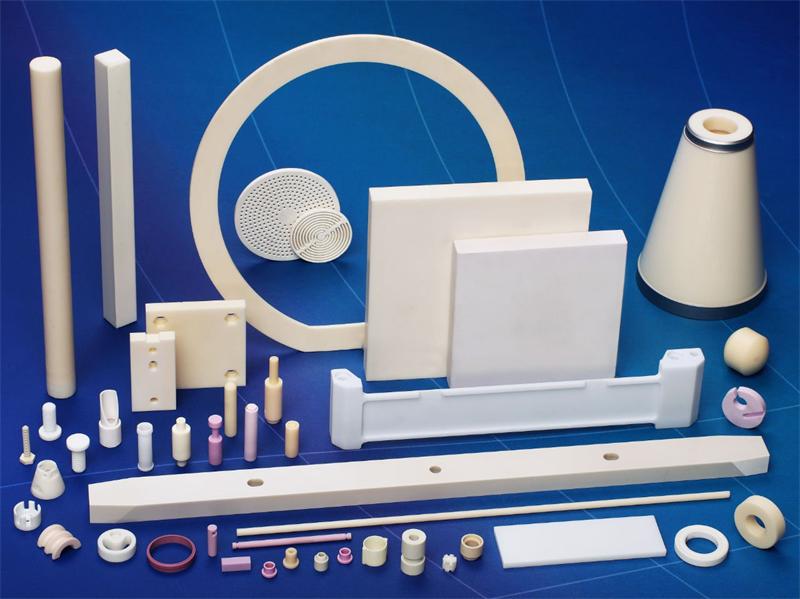
Customization service for specifications and dimensions
Due to the diverse designs of kilns, we offer highly flexible customization services
-Raw material system: Magnesium stabilized (MSZ), calcium stabilized (CSZ), or yttrium stabilized (YSZ) zirconia systems can be selected according to the operating temperature.
-Product form: We provide dense sintered bricks, fused cast bricks, zirconia hollow ball lightweight bricks, irregular crucibles, furnace tubes, and amorphous castables.
-Processing accuracy: Supports customized drawings and provides full process services from raw material sintering to precision grinding, ensuring dimensional tolerances are controlled within ± 0.5%.
Customer Application Cases
Case: Renowned Optoelectronic Materials Enterprise – Renovation of Sapphire Crystal Growth Furnace Lining
-Background of demand: The enterprise mainly produces sapphire substrates for LED. The working temperature of its long crystal furnace is as high as 2200 ℃, and it was originally lined with metal tungsten molybdenum. Although it has extremely high temperature resistance, there are two major pain points: first, tungsten molybdenum materials are prone to volatilization at high temperatures, which can deposit on the surface of sapphire crystals and cause “cloud layer” defects, resulting in a low yield rate; Secondly, the metal lining has poor insulation effect, consumes a lot of electricity, and will deform after about six months of use, affecting the uniformity of the temperature field inside the furnace.
-Solution: We have provided a gradient composite lining solution based on high-purity zirconia ceramics for it.
-Material upgrade: Yttrium stabilized zirconia (YSZ) is used as the main crystal phase, utilizing its extremely low vapor pressure and chemical inertness at ultra-high temperatures to eliminate volatile pollution sources.
-Structural design: Designed a multi-layer composite structure. Dense zirconia plates (with a bulk density>5.0g/cm ³) are used for direct contact with the hot surface to ensure resistance to erosion and scouring; The insulation layer adopts zirconia hollow sphere bricks (volume density~2.5g/cm ³), which significantly reduce thermal conductivity by sealing the pores.
-Micro control: In response to the problem of easy “destabilization” of zirconia after repeated use, a rich stable phase design is adopted to ensure that the material does not undergo phase transformation pulverization after more than 30 thermal cycles.
-Final effect:
-Life extension: The service life of the lining has been significantly extended from six months (metal lining) to over two years, reducing the frequency of shutdown maintenance.
-Quality improvement: The furnace environment is extremely pure, with no volatile pollution, and the yield of sapphire crystals has increased by 15% -20%.
-Significant energy saving: Due to the excellent thermal insulation performance of zirconia ceramics and the gradient structure design, the actual electricity consumption of the long crystal furnace has been reduced by more than 30%, and the renovation cost was recovered in the same year.
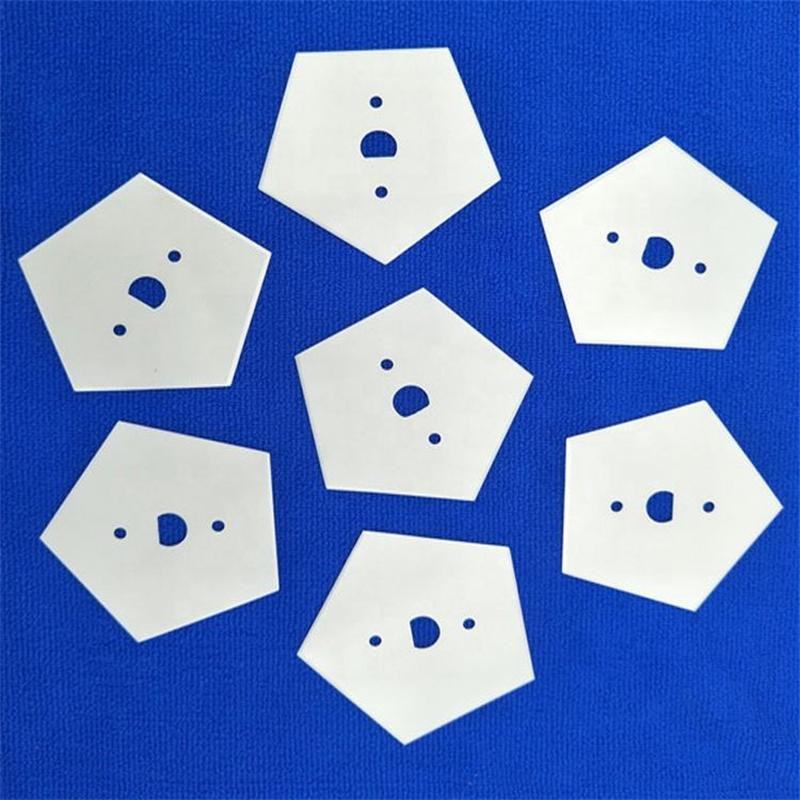
Whether it’s conventional steel and glass smelting, or future oriented sapphire and new energy material sintering, zirconia ceramic refractory materials are your best partner for conquering high temperature limits. We not only provide standard brick types, but also specialize in customizing exclusive zirconia refractory solutions based on your furnace conditions, temperature curves, and erosion media.
Brudeze Ceramics supplies and sells a wide range of high-quality quartz glass, including alumina ceramics, zirconia ceramics, silicon nitride ceramics, aluminum nitride ceramics, silicon carbide ceramics, boron carbide ceramics, bioceramics, machinable ceramics, etc. We can meet the customization requirements of various ceramic products.
Tags: boron carbide ceramics
PREVIOUS:Thermal insulation performance of zirconia ceramics
NEXT:Applications of zirconia ceramics in the aerospace industry
CATEGORIES
LATEST NEWS
- Which is more wear-resistan...
- Are microcrystalline cerami...
- What is the difference betw...
- Compared to ordinary cerami...
- What are the main material ...
- Large sized microcrystallin...
- What is the maximum operati...
- Low dielectric constant mic...
- High hardness and wear-resi...
- Low expansion microcrystall...