
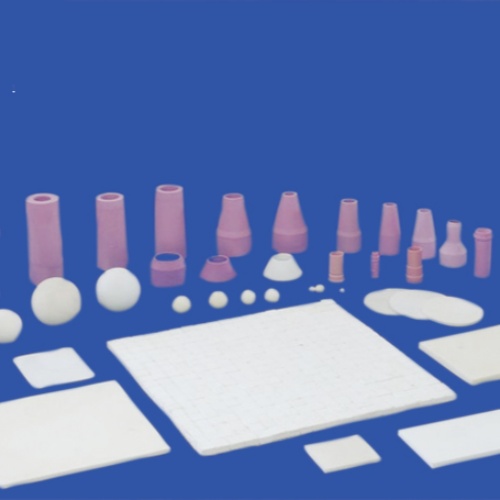
Aluminum oxide electronic ceramic components are advanced electronic material components made mainly from high-purity aluminum oxide (Al ₂ O3) through precision molding and high-temperature sintering processes. With its excellent insulation, high temperature resistance, wear resistance, and chemical stability, it has become an indispensable key component in high-end fields such as semiconductors, new energy, 5G communication, and industrial electronics.
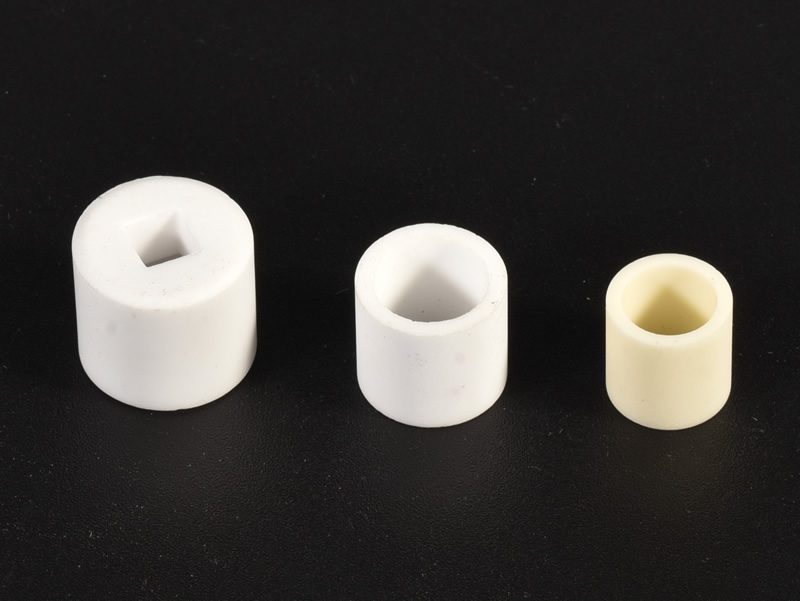
FAQ: Quick Understanding of Alumina Electronic Ceramic Components
Q1: What are the core performance indicators of alumina electronic ceramics?
A: The main indicators include volume resistivity (≥ 10 ¹⁴Ω· cm at room temperature), breakdown voltage (≥ 10kV/mm), thermal conductivity (27W/(m · K)), Mohs hardness (level 9), and operating temperature (long-term 1200 ℃, short-term 1600 ℃). These properties enable it to remain stable in high-pressure, high-temperature, and high-frequency environments.
Q2: Which industries have the highest demand for alumina electronic ceramics?
A: Semiconductor manufacturing (accounting for about 45%), new energy (lithium-ion/photovoltaic/wind power), 5G communication, industrial electronics (such as high-voltage inverters), and aerospace are the main application areas. For example, 90% of electrostatic chucks and wafer carriers in semiconductor equipment use alumina ceramics.
Q3: Can alumina ceramics replace metal or plastic components?
A: In scenarios that require insulation, high temperature resistance, and wear resistance, alumina ceramics can completely replace metals (such as stainless steel bearings) and plastics (such as insulation gaskets). Its density is only one-third of that of steel, and its chemical stability far exceeds that of plastic, extending its lifespan by 3-5 times.
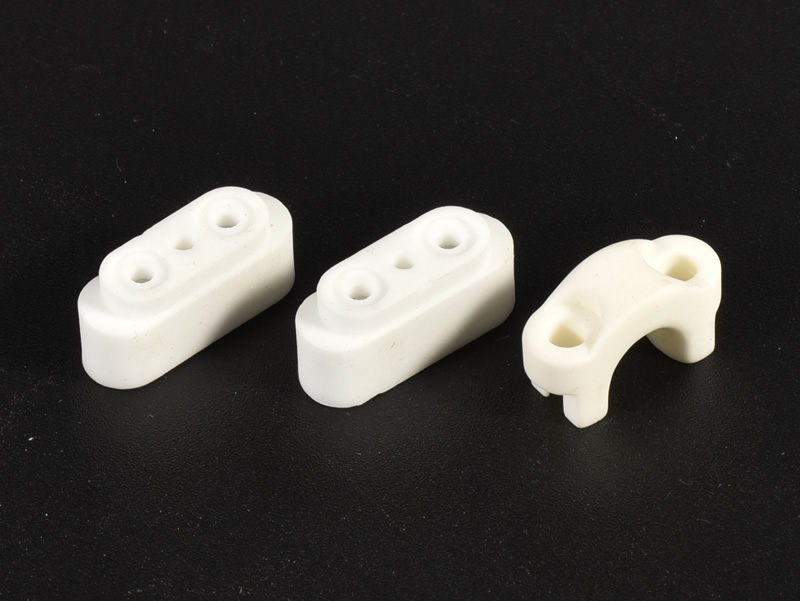
User core needs and problem solving
User core requirements
Insulation safety: prevent leakage and short circuit of electronic devices, and ensure safety in high-voltage environments.
High temperature stability: Maintain stable performance under high temperature conditions, such as new energy vehicle battery management systems and semiconductor etching chambers.
Wear resistant and long-lasting: Reduce the replacement frequency of high-frequency friction components (such as robotic arms and bearings) and lower maintenance costs.
Precision adaptation: Meet the requirements of micrometer level dimensional accuracy and adapt to miniaturized electronic components (such as ceramic brackets for mobile phone cameras).
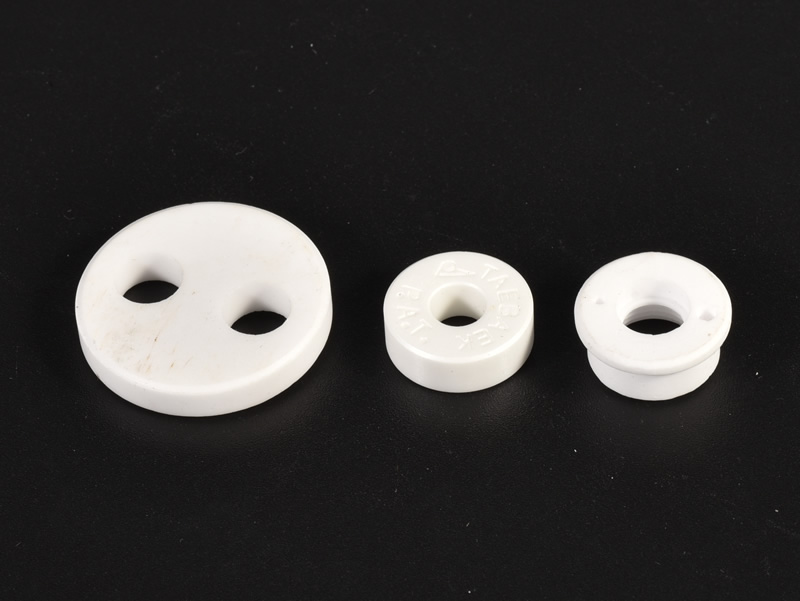
Key issues to be addressed
Semiconductor manufacturing pollution control: High purity alumina ceramics (purity ≥ 99.5%) are used to etch the inner lining of the cavity to avoid metal ion contamination of the wafer.
New energy equipment safety upgrade: The power battery isolation plate adopts alumina ceramic to prevent positive and negative short circuits and reduce the risk of fire.
5G device heat dissipation optimization: Ceramic substrates replace traditional plastics to enhance signal transmission stability and strengthen heat dissipation capabilities.
Industrial electronic corrosion resistance: Chemical valve seals are resistant to strong acids and alkalis, extending the service life of equipment.
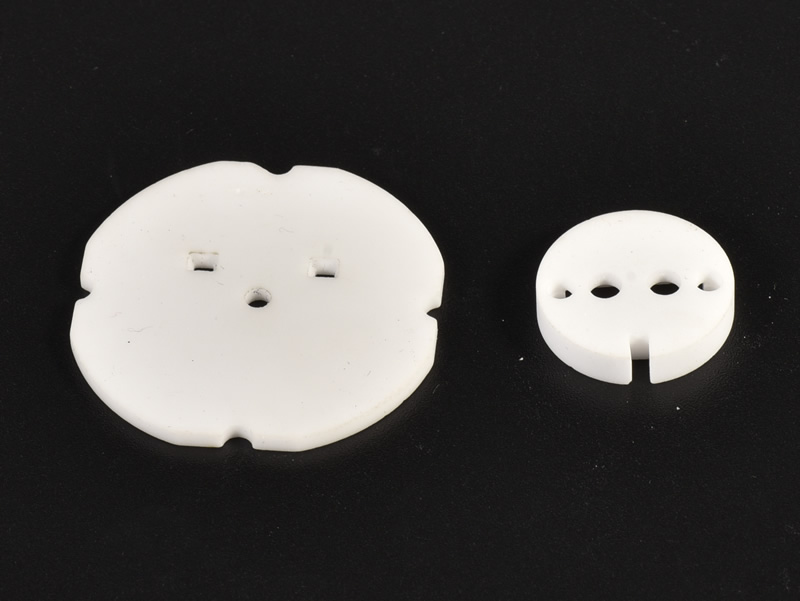
Application scenarios cover the entire industry chain
Semiconductor equipment: electrostatic chuck, wafer stage, gas nozzle, protective ring, etc., suitable for the entire process of etching, deposition, polishing, etc.
In the field of new energy, power battery separators, motor insulation sleeves, and internal gaskets for charging piles are used to enhance equipment safety and energy efficiency.
5G communication: Base station RF device packaging shell, ceramic filter, optimized high-frequency signal transmission.
Industrial electronics: insulation components for high-voltage sensors, bearings for servo motors, ensuring stability in extreme environments.
Aerospace: Engine combustion chamber lining, high-temperature guide vanes, capable of withstanding thermal shocks of thousands of degrees Celsius.
differentiated advantage
Performance balance: 95% alumina ceramics balance hardness (Mohs 9 grade), toughness (fracture toughness 3-4.8MPa · m ²), and cost, with a better cost-effectiveness than 99% alumina.
Precision machining: supports processes such as dry pressing, cold isostatic pressing, and slurry casting, with tolerances controlled within ± 0.001mm and surface roughness Ra ≤ 0.1 μ m.
Customized service: providing one-stop solutions from formula design to processing of irregular parts, covering the size range of 0.1mm-500mm.
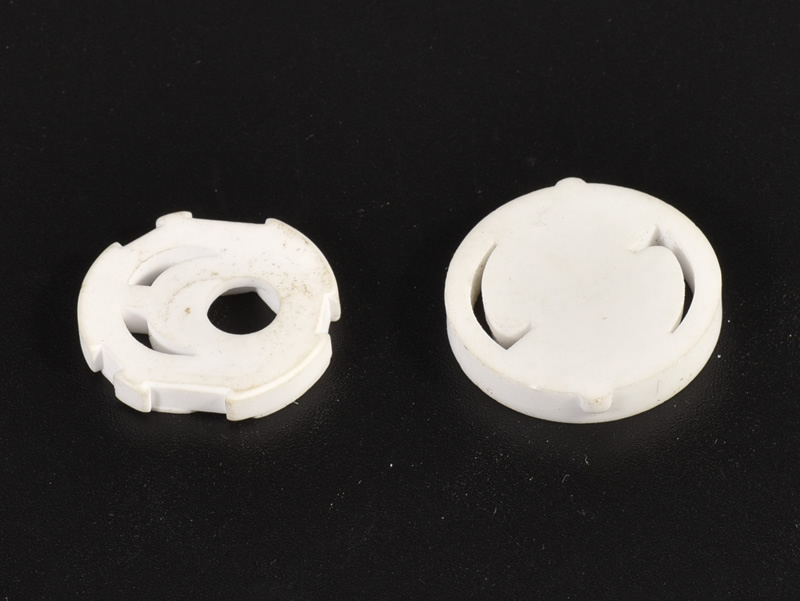
Customer Case
A leading semiconductor company: customized alumina electrostatic chuck for 3nm process etching equipment, with a yield rate increase of 12% and annual maintenance cost savings of over 2 million yuan.
New energy vehicle company A: Replacing metal bearings with ceramic bearings reduces motor noise by 8dB and increases driving range by 3%.
5G equipment manufacturer B: Ceramic substrates replace traditional PCBs, reducing base station power consumption by 15% and signal loss by 0.5dB/m.
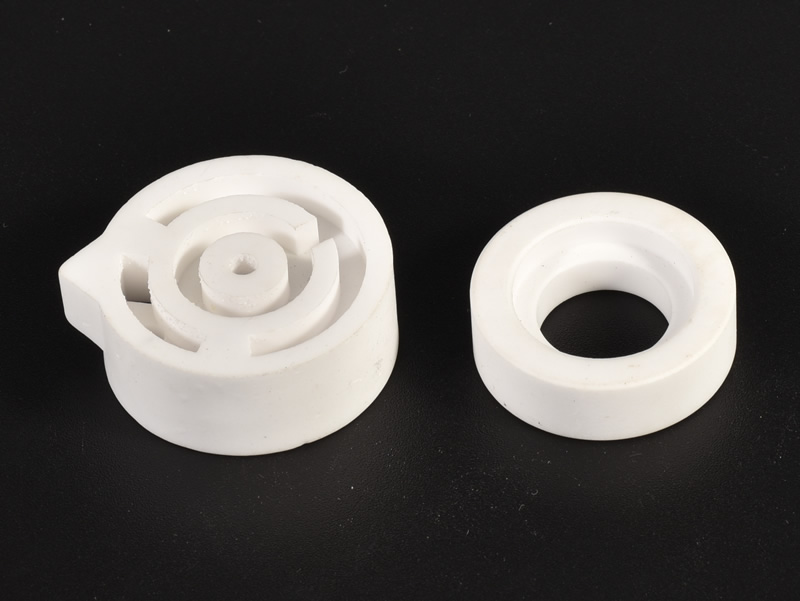
Customize now and unlock high-performance electronic ceramic solutions
Whether you need standard parts or customized parts, our team will provide full process support from material selection, structural design to mass production according to your working conditions. Click to consult for free samples and exclusive quotes!
Brudeze Ceramics supplies and sells a wide range of high-quality quartz glass, including alumina ceramics, zirconia ceramics, silicon nitride ceramics, aluminum nitride ceramics, silicon carbide ceramics, boron carbide ceramics, bioceramics, machinable ceramics, etc. We can meet the customization requirements of various ceramic products.
Tags: boron carbide ceramics
PREVIOUS:Alumina perforated ceramic disc
CATEGORIES
LATEST NEWS
- Which is more wear-resistan...
- Are microcrystalline cerami...
- What is the difference betw...
- Compared to ordinary cerami...
- What are the main material ...
- Large sized microcrystallin...
- What is the maximum operati...
- Low dielectric constant mic...
- High hardness and wear-resi...
- Low expansion microcrystall...