
What is the sintering temperature for alumina ceramics
Alumina ceramics, as a high-performance ceramic material, play an important role in various fields such as industrial production, electronic technology, national defense and military industry. As a key step in the preparation process of alumina ceramics, sintering temperature control is directly related to the performance and quality of the ceramics.
1、 Sintering temperature range
The sintering temperature of alumina ceramics is generally high, ranging from 1500 ° C to 1700 ° C. However, this is only a rough range, and the specific temperature will be affected by various factors. For example, the sintering temperature of pure alumina ceramics may be higher, typically above 1700 ° C. However, such a high sintering temperature is difficult to achieve in industry, as it not only incurs high costs but may also lead to numerous defects in the ceramic structure, affecting the mechanical properties of the material.
2、 Factors affecting sintering temperature
Alumina content: The sintering temperature of alumina ceramics is closely related to their alumina content. The sintering temperature of high-purity alumina ceramics (with Al ₂ O3 content above 99.9%) is often higher, reaching 1650-1990 ° C. This type of ceramic has a wide range of applications in the electronics industry due to its excellent transparency, alkali metal corrosion resistance, and insulation properties.
Sintering additives: By adding sintering additives such as MgO, Cr ₂ O ∝, SiO ₂, etc., the sintering temperature of alumina ceramics can be effectively reduced. For example, the addition of chromium oxide can lower the sintering temperature of alumina ceramics to around 1520 ° C, which is nearly 200 ° C lower than the temperature of sintering alumina alone.
Sintering atmosphere: Sintering atmosphere is also an important factor affecting the sintering temperature of alumina ceramics. Under an oxidizing atmosphere, certain components in alumina ceramics may be oxidized; In a reducing atmosphere, certain oxides may be reduced. Therefore, choosing the appropriate sintering atmosphere is crucial for controlling the sintering temperature and achieving ideal ceramic properties.
3、 The Influence of Sintering Temperature on Ceramic Properties
Insufficient temperature: If the sintering temperature is insufficient, the density of the material will decrease, resulting in a decrease in the mechanical properties and thermal stability of the ceramic. In this case, there may be many pores and defects inside the ceramic, which affect its service life and application range.
Excessive temperature: If the sintering temperature is too high, the material may twist and deform, and even crack. This not only damages the integrity of the ceramic, but also significantly reduces its strength and toughness. In addition, excessively high sintering temperatures may also lead to excessive growth of ceramic grains, further affecting the properties of the material.
4、 Coordination of sintering temperature and time
In the sintering process of alumina ceramics, besides temperature, time is also an important factor that cannot be ignored. The sintering time usually ranges from several hours to tens of hours, depending on the type of material and the set sintering temperature. Short time and insufficient internal reaction of the material may result in high porosity; If the time is too long, it may lead to excessive grain growth and weakened strength of the material. Therefore, precise control of temperature and time is required during the sintering process to achieve ideal ceramic properties.
5、 Improvement of sintering technology
In order to improve the sintering efficiency and performance of alumina ceramics, people are constantly exploring and improving sintering techniques. For example, the hot isostatic pressing firing technology uses high-temperature and high-pressure gas as the pressure transmission medium, which has the advantage of uniform heating in all directions. This technology is very suitable for sintering complex shaped products and can significantly improve the uniformity and performance of ceramics.
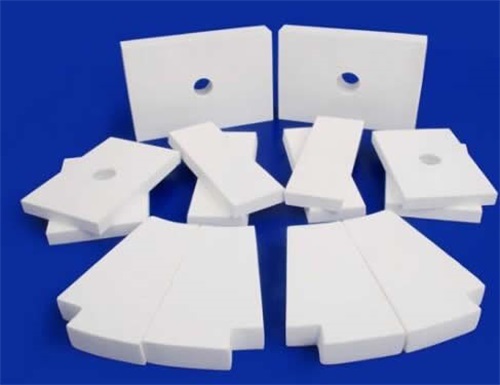
The sintering temperature of alumina ceramics is a complex and critical issue. In practical applications, it is necessary to choose the appropriate sintering temperature and time based on the specific material type, application field, and process requirements. Meanwhile, by continuously improving sintering technology and adding sintering additives, the performance of alumina ceramics can be further enhanced and production costs can be reduced.
PREVIOUS:What is alumina ceramic
CATEGORIES
LATEST NEWS
- Zirconia Ceramic Rod Custom...
- High-temperature resistance...
- What is the wear resistance...
- What is the hardness of cer...
- Aluminum oxide ceramic cust...
- What are the main aspects o...
- What are the mechanical pro...
- Thermal properties of zirco...
- What properties should be c...
- What are the mechanical pro...