
High-temperature resistance of ceramic flanges
In high-temperature industrial fields such as petrochemicals, semiconductor manufacturing, glass processing, metallurgy and new energy, the high-temperature resistance performance of equipment connection components is directly related to production safety, efficiency and cost. Traditional metal flanges are prone to problems such as deformation, oxidation, creep and sealing failure at extreme temperatures. However, ceramic flanges, with their outstanding high-temperature resistance, are becoming the ideal choice for high-temperature industrial applications. As a professional manufacturer of custom quartz products, we provide high-performance ceramic flange solutions for global customers, effectively addressing technical challenges in high-temperature environments.
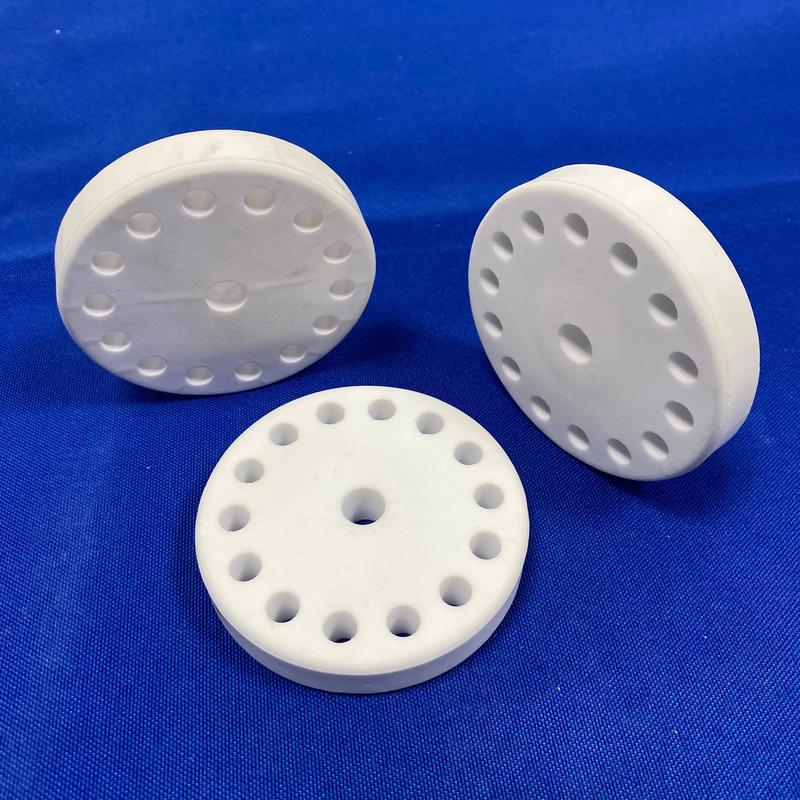
The core advantage of high-temperature resistance of ceramic flanges
- Excellent heat resistance stability
Ceramic flanges are made of high-purity alumina, zirconia or quartz ceramic materials and can operate stably for a long time in high-temperature environments ranging from 1200°C to 1600°C, with a short-term heat resistance peak of up to 1800°C. Its coefficient of thermal expansion is extremely low (usually 0.5-1.0×10⁻⁶/°C), much lower than that of metallic materials. It can maintain dimensional stability under drastic temperature changes and avoid seal failure caused by thermal expansion and contraction. - Excellent thermal shock resistance
Through advanced material formulas and sintering processes, our ceramic flanges possess excellent thermal shock resistance and can withstand rapid temperature changes without cracking. For instance, in the application of semiconductor diffusion furnaces, ceramic flanges can withstand rapid heating processes from room temperature to 1000°C while maintaining stable performance. - Chemical stability at high temperatures
Ceramic materials have extremely strong resistance to most acids, alkalis and corrosive gases at high temperatures, and will not undergo high-temperature oxidation or corrosion like metals. They are particularly suitable for corrosive high-temperature environments in the chemical and metallurgical industries.
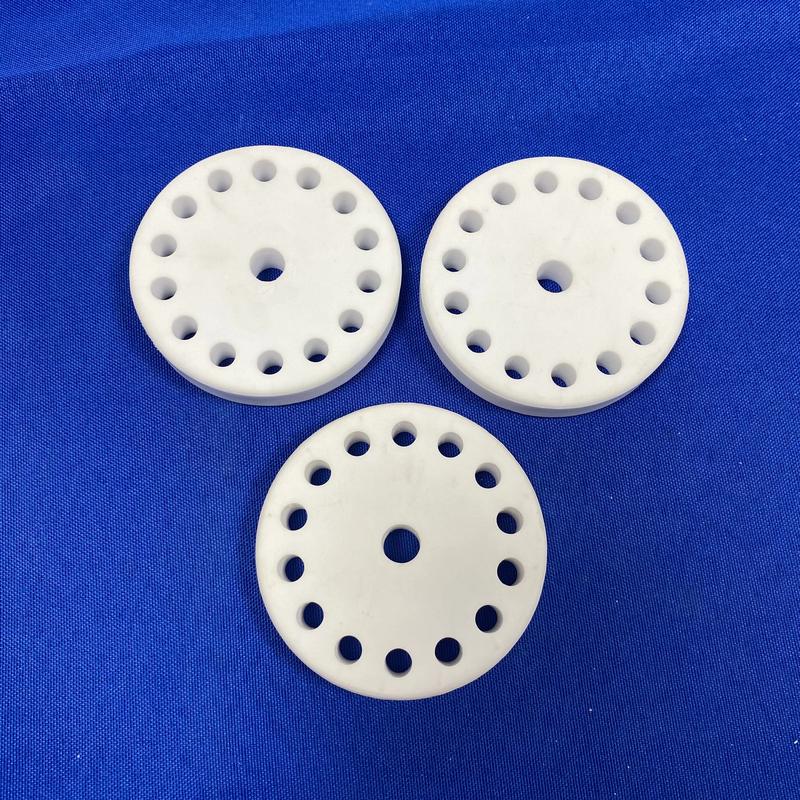
Product application scenarios and problem-solving capabilities
Semiconductor manufacturing equipment
- Application scenarios: High-temperature connection components for diffusion furnaces, CVD reaction chambers, and epitaxial growth systems
- Problem-solving: Avoid metal contamination of wafers, provide stable vacuum seals, and withstand rapid thermal cycling
Our solution: High-purity alumina flange, surface polished to Ra≤0.2μm, ensuring pollution-free transmission
- Glass processing industry
- Application scenarios: Outlet of glass furnaces, connection points of forming equipment
- Problem-solving: Withstand the high temperature of the molten glass (1300-1600°C) to prevent leakage caused by deformation at the connection points
Our solution: Custom-sized zirconia toughened ceramic flanges with excellent thermal shock resistance
- Chemical and petroleum industries
- Application scenarios: Connection systems for high-temperature reaction vessels, cracking furnaces, and catalytic devices
- Problem-solving: Resist the erosion of high-temperature corrosive media and avoid downtime losses caused by frequent replacements
Our solution: Corrosion-resistant ceramic-coated flange, extending service life by 3 to 5 times
- New energy field
- Application scenarios: Solid-state battery manufacturing equipment, high-temperature components of hydrogen energy systems
- Problem-solving: Maintain stability and safety in the high-temperature environment for the synthesis of new energy materials
Our solution: Composite structure ceramic flange, which combines strength and heat resistance
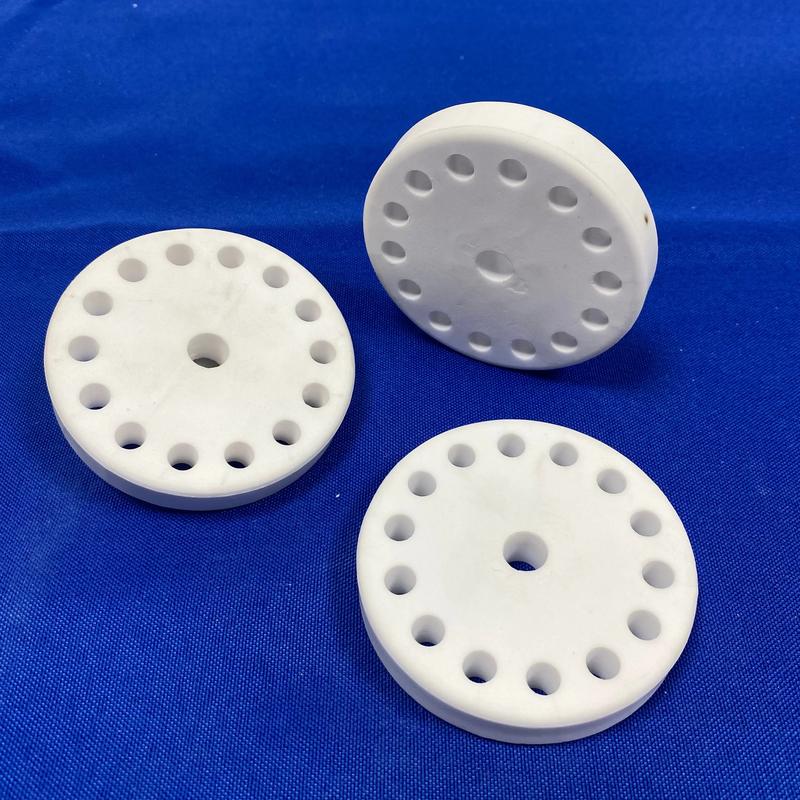
Why choose our ceramic flange products
- Professional competence in materials science
We have over 15 years of experience in the research and development of special ceramics. We collaborate with materials science laboratories to continuously optimize ceramic formulas and develop dedicated material systems for different application environments. - Precision manufacturing technology
The isostatic pressing forming and precision sintering processes are adopted to ensure uniform density and accurate dimensions of the products
The processing accuracy can reach ±0.01mm, meeting the assembly requirements of high-precision equipment
We can provide customized complex structures according to customer requirements, including designs such as irregular-shaped holes and special slots - Strict quality control system
Each batch of products has undergone the following tests:
- High-temperature performance test: Long-term stability test under simulated actual working temperature conditions
- Sealing performance testing: Helium mass spectrometry leak detection ensures vacuum sealing
- Dimensional accuracy verification: Full-size inspection with a three-coordinate measuring instrument
- Material purity analysis: XRF/XRD analysis ensures that the material meets the standards
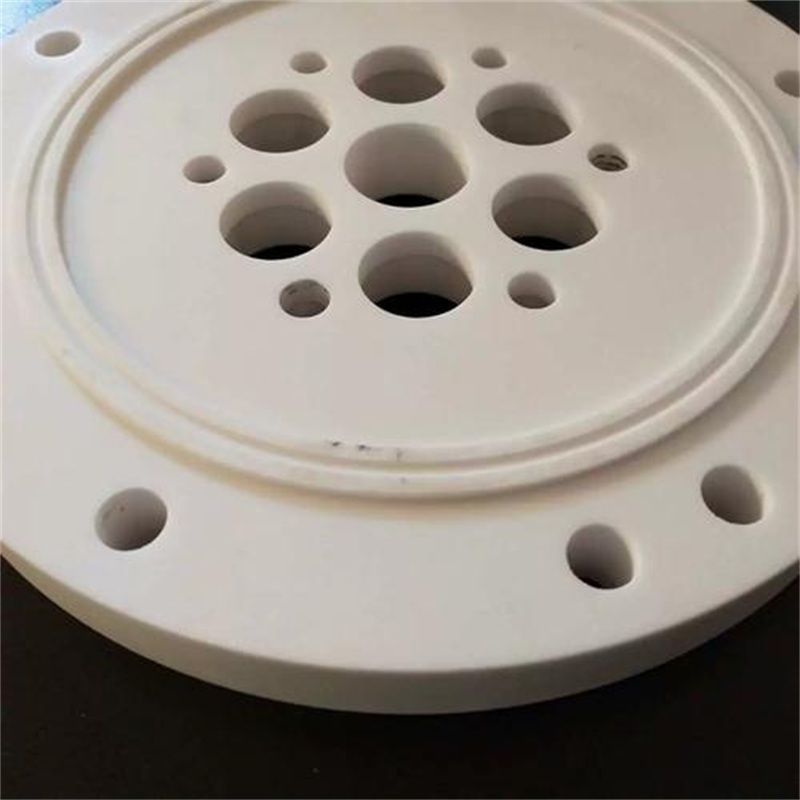
Customer case verification
Case One: European semiconductor equipment manufacturers
Challenge: At a working temperature of 1350°C, the original stainless steel flange of the diffusion furnace system of a well-known semiconductor equipment manufacturer deformed, resulting in a decrease in vacuum degree and metal contamination problems.
Our solution: We offer customized high-purity alumina ceramic flanges, optimize the sealing groove design, and add cooling channels.
Result: The vacuum degree of the system has increased by two orders of magnitude, the product contamination rate has decreased by 90%, and the flange life has been extended from the original six months to over three years.
Case Two: American Specialty Glass manufacturer
Challenge: On the fiberglass production line, the temperature at the connection point of the furnace outlet reaches 1450° C. Traditional flanges need to be replaced monthly, resulting in frequent shutdowns and high maintenance costs.
Our solution: Design multi-layer composite structure ceramic flanges, with high-temperature resistant ceramic as the inner layer and an insulation layer added to the outer layer.
Result: The maintenance cycle was extended to 18 months, the annual maintenance cost was reduced by 65%, and the production line utilization rate increased by 12%.
Case Three: Asian New Energy Materials Enterprises
Challenge: In the high-temperature synthesis equipment of solid electrolyte materials, the connecting components are prone to brittleness and failure in a hydrogen environment at 1200°C.
Our solution: Develop anti-oxidation ceramic flanges specifically for hydrogen environments and optimize the grain boundary structure design.
Result: The continuous operation time has been increased from 300 hours to over 2,000 hours, and the stability of product batches has been significantly improved.
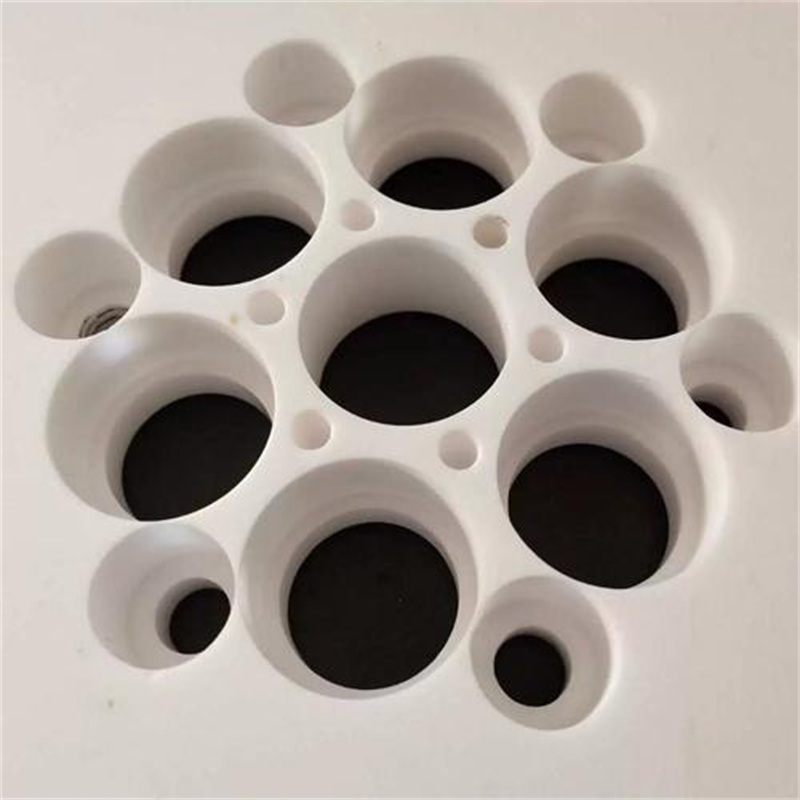
In today’s increasingly demanding high-temperature industrial applications, the selection of ceramic flanges not only concerns the performance of individual components but also directly affects the reliability, safety and economy of the entire system. With profound technical accumulation in the field of special ceramics and global service experience, we are committed to providing customers with ceramic flange solutions that feature outstanding high-temperature resistance, long service life and more favorable comprehensive costs.
What problems or challenges have you encountered in high-temperature environments during the use of your product? Welcome to leave a message and communicate with us
Brudeze Ceramics supplies and sells a wide range of high-quality quartz glass, including alumina ceramics, zirconia ceramics, silicon nitride ceramics, aluminum nitride ceramics, silicon carbide ceramics, boron carbide ceramics, bioceramics, machinable ceramics, etc. We can meet the customization requirements of various ceramic products.
Tags: boron carbide ceramics
CATEGORIES
LATEST NEWS
- High-temperature resistance...
- What is the wear resistance...
- What is the hardness of cer...
- Aluminum oxide ceramic cust...
- What are the main aspects o...
- What are the mechanical pro...
- Thermal properties of zirco...
- What properties should be c...
- What are the mechanical pro...
- What are the main advantage...