
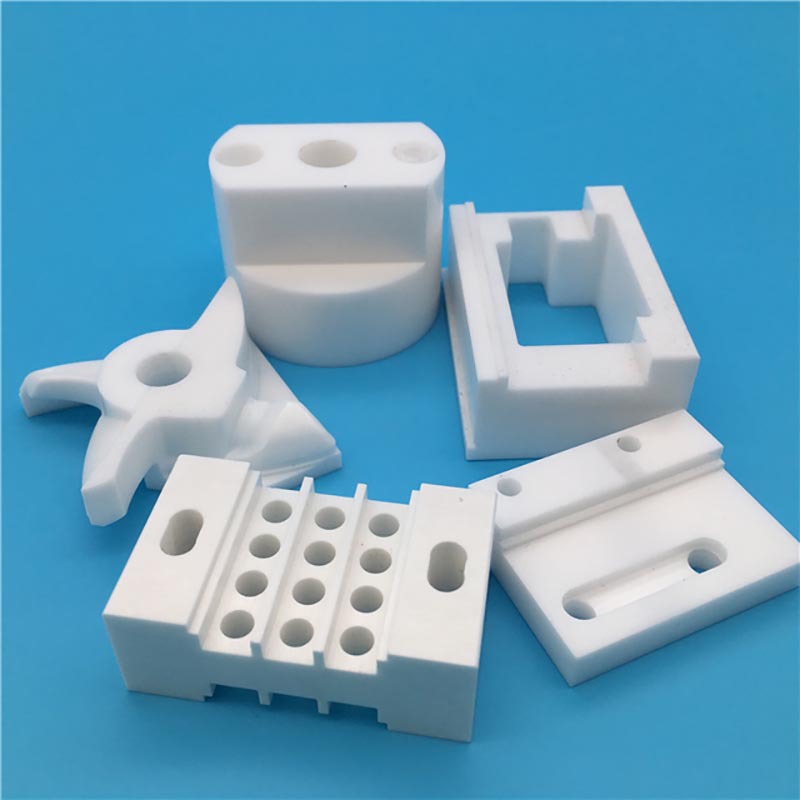
What are the shapes of processable ceramics
Processable ceramics, as an advanced engineering material, have been widely applied in high-end fields such as aerospace, semiconductors, and medical equipment due to their unique mechanical processing properties and excellent thermal and electrical characteristics.
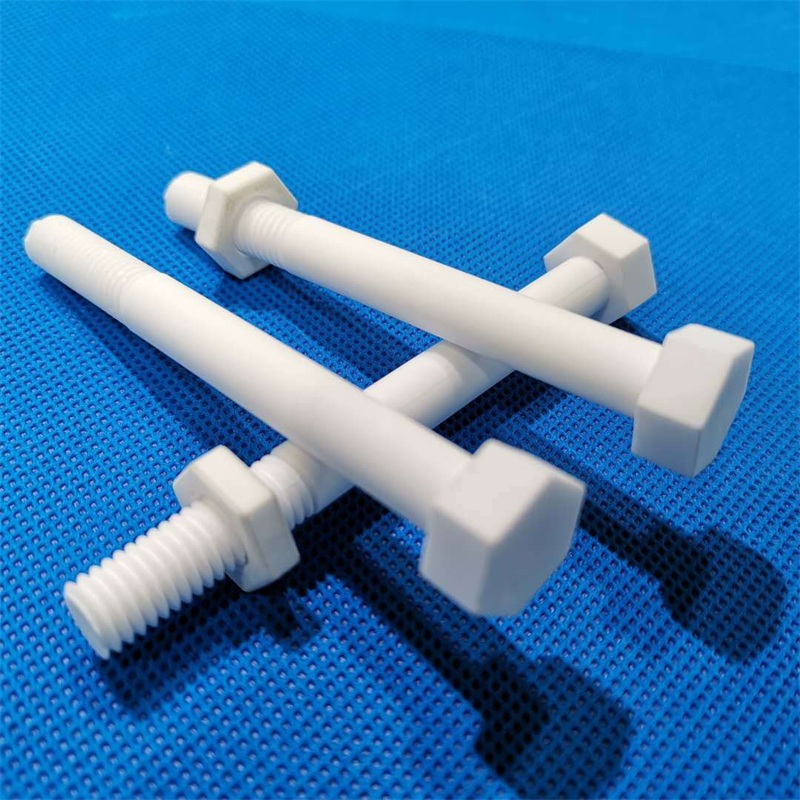
Common shape classifications of processable ceramics
- Basic geometric shapes
- Plate and sheet: Flat plates, gaskets and liners with thicknesses ranging from 0.5mm to 50mm
- Discs and rings: Discs, gaskets and sealing rings with diameters ranging from 3mm to 500mm
- Cylindrical: Cylinders, prisms, and guide columns with diameters ranging from 1 to 200mm
- Tubular structure: straight pipe, special-shaped pipe, and sleeve, with precisely controllable wall thickness
- Complex three-dimensional shapes
- Irregular curved surface parts: parabolic curved surfaces, spherical surfaces, irregular curved surfaces
- Porous structure: Uniformly distributed microporous ceramics with customizable porosity
- Combined structure: Multi-layer composite, inlaid, and assembled integrated components
- Micro-precision shape
- Miniaturized components: Semiconductor micro-fixtures, probe holders, insulating sheets
- Precision feature parts: micro-grooves, micro-holes, fine tooth structures, with an accuracy of ±0.01mm
- Thin-walled structure: Brittle thin-walled parts with a thickness of less than 0.3mm
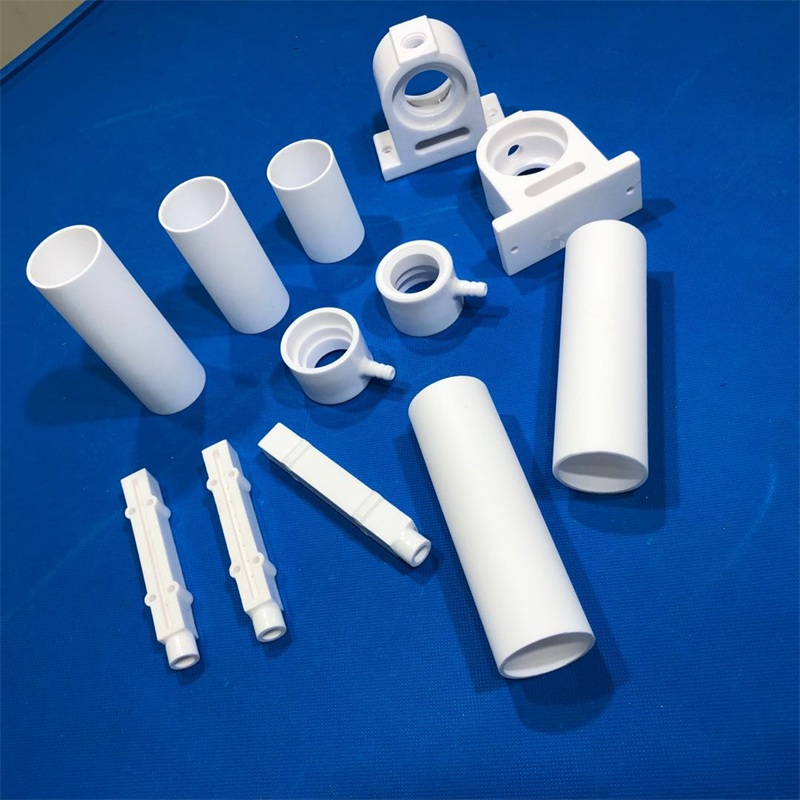
Product advantages and performance features
Material property advantages
- Excellent machinability: It can be turned, milled, drilled and tapped with standard hard alloy or diamond tools
- Excellent thermal stability: Resistant to high temperatures up to 1000°C, with a low coefficient of thermal expansion
- Excellent electrical insulation: Low dielectric loss at high frequencies and high volume resistivity
- Good chemical inertness: Resistant to acid and alkali corrosion, and does not produce polluting particles
- Balanced mechanical properties: High hardness, good wear resistance, while maintaining moderate toughness
The comparative advantages over traditional ceramics
Compared with the characteristics of traditional sintered ceramics, which require mold forming and are difficult to be reprocessed, processable ceramics, while maintaining the excellent performance of ceramics, offer metal-like processing freedom and significantly shorten the sample development cycle.
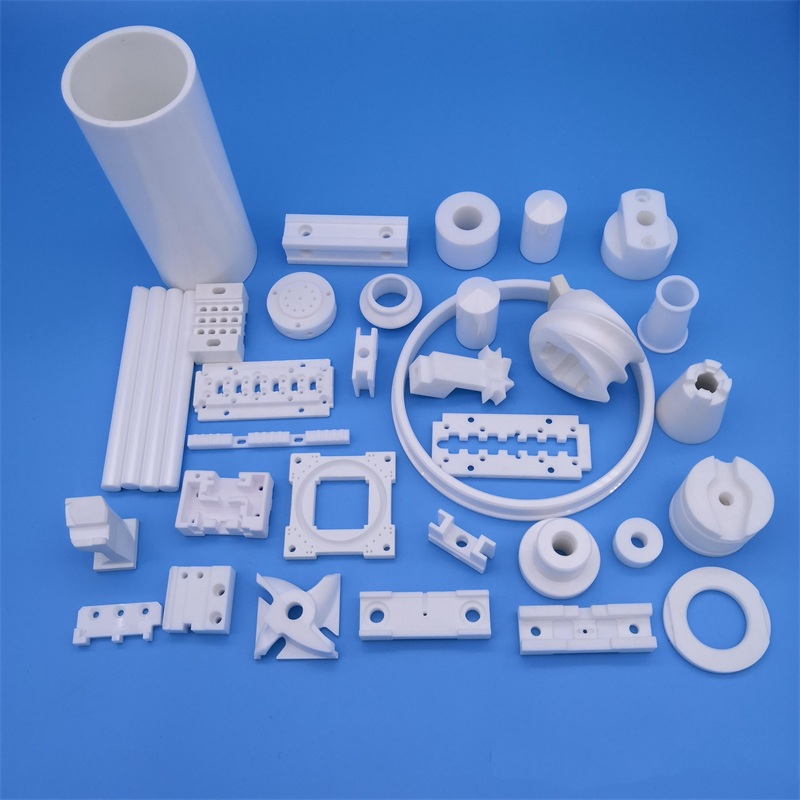
Customization service capability for specifications and dimensions
- Standardized product series
We offer regular-sized stock products, including
Standard plates: 100×100mm to 300×300mm, thickness 1-30mm
Standard rods: Diameter 5-100mm, length 10-500mm
Standard pipe: Inner diameter 2-150mm, wall thickness 1-20mm - All-round customization capability
- Size customization: Supports precision manufacturing within the size range from microns to meters
- Tolerance control: The standard tolerance is ±0.05mm, and for high-precision parts, it can reach ±0.005mm
- Surface treatment: Polishing, grinding, coating and other surface finishing services are available
- Batch flexibility: Supports flexible production from single samples to mass production of tens of thousands of pieces
- Design support services
- Free drawing review and process feasibility analysis
Suggestions for optimizing processing schemes of complex structures
Material selection guidance and performance verification support
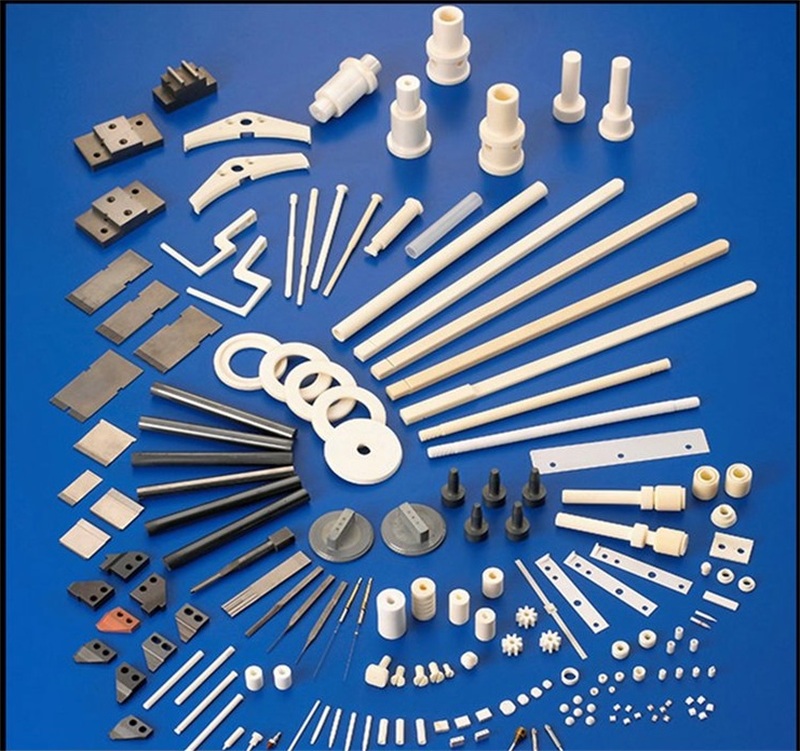
The core problem solved by processable ceramics
Insulation and support in high-temperature environments
Problem scenarios: Insulation of temperature measurement elements in high-temperature furnaces, semiconductor heat treatment fixtures
Solution: Utilize processable mica ceramics, which can withstand temperatures up to 1300°C and still maintain excellent insulation
- Signal integrity of high-frequency circuits
Problem scenarios: High-frequency test fixtures, microwave component substrates
Solution: Low dielectric constant, low-loss processable ceramics to reduce signal attenuation - Long-term stability in highly corrosive environments
Problem scenarios: Sealing of chemical equipment, components of semiconductor etching equipment
Solution: Fully dense and processable boron nitride ceramics with excellent resistance to acid and alkali corrosion - Key applications of thermal expansion matching
Problem scenarios: Metal-ceramic sealing, composite substrates
Solution: Processable composite ceramics with adjustable coefficients of thermal expansion
Application Case sharing
Case One: Semiconductor Wafer Transfer System
Challenge: A certain semiconductor equipment manufacturer requires a wafer support that can operate in a high-temperature vacuum environment, with high dimensional stability and no particle contamination.
Solution: We customized an aluminum nitride processable ceramic bracket for it, featuring a hollow lightweight design with a thermal deformation of less than 0.1% at 800°C.
Results: The product lifespan is five times longer than that of the original material, and the wafer contamination rate is reduced by 90%.
Case Two: Aerospace High-temperature Sensors
Challenge: The testing of aero engines requires sensor insulation housings that can withstand temperatures up to 1100°C, demanding complex internal flow channels and precise coordination with metal components.
Solution: A processable silicate ceramic shell was developed, with complex cooling channels processed in one piece. The coefficient of thermal expansion matches that of the alloy shell.
Results: The operating temperature of the sensor has increased by 200°C, and the signal stability has improved by 40%.
Case Three: Components of Medical Linear accelerators
Challenge: Medical equipment manufacturers require high-precision, non-magnetic collimator components for radiotherapy equipment, with a processing accuracy of ±0.02mm and radiation stability.
Solution: Special processable composite ceramics are adopted, and complex curved surfaces are achieved through five-axis precision machining, with a surface roughness Ra<0.4μm.
Achievements: The beam collimation accuracy has been improved by 60%, and the equipment calibration cycle has been extended by three times.
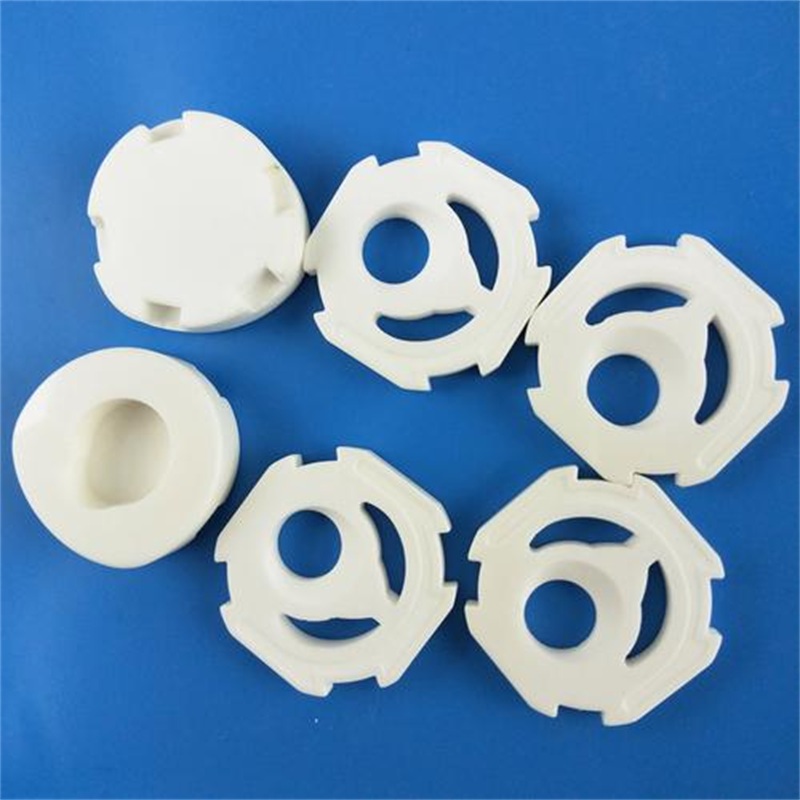
The shapes of machinable ceramics are almost exclusively limited by design imagination and the boundaries of processing technology. From simple gaskets to complex porous structures, from millimeter-sized microcomponents to meter-sized large parts, modern machinable ceramic technology offers engineers unprecedented design freedom.
Brudeze Ceramics supplies and sells a wide range of high-quality quartz glass, including alumina ceramics, zirconia ceramics, silicon nitride ceramics, aluminum nitride ceramics, silicon carbide ceramics, boron carbide ceramics, bioceramics, machinable ceramics, etc. We can meet the customization requirements of various ceramic products.
Tags: boron carbide ceramics
PREVIOUS:What are the advantages of machinable ceramic parts
CATEGORIES
LATEST NEWS
- Ceramic PIN needle manufact...
- What are the applications o...
- What are the shapes of proc...
- What are the advantages of ...
- What are the types of machi...
- What is the high-temperatur...
- Dielectric constant of sili...
- What is a photovoltaic cera...
- Photovoltaic ceramic suctio...
- What are the classification...