
What are the material properties of silicon nitride ceramics
Silicon nitride ceramics, as an advanced inorganic non-metallic material, play an irreplaceable role in many industrial fields due to their excellent performance.
Chemical composition and structural characteristics
The chemical formula of silicon nitride ceramics is Si3N4, which is a compound formed by the close bonding of silicon atoms and nitrogen atoms through covalent bonds. Its basic structural unit is the [SiN4] tetrahedron, with silicon atoms located at the center of the tetrahedron and four nitrogen atoms located at the four vertices of the tetrahedron. These tetrahedra form a continuous and robust network structure in three-dimensional space by sharing one atom every three, endowing silicon nitride ceramics with high strength and low density characteristics.
Silicon nitride ceramics have two crystal structures, alpha and beta, both of which are hexagonal. Among them, α – silicon nitride appears as needle shaped crystals, while β – silicon nitride appears as granular crystals. The difference in crystal structure between these two types results in differences in performance of silicon nitride ceramics.
physical property
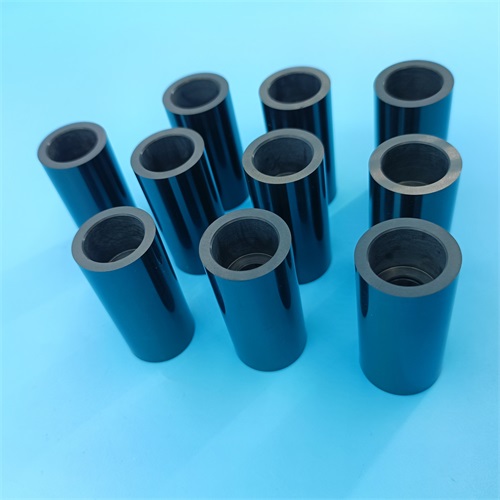
High strength and hardness: Silicon nitride ceramics have extremely high bending strength and hardness, with a typical bending strength of 500-700 MPa and a hardness of over 9 on the Mohs scale, second only to diamond and cubic boron nitride. This enables silicon nitride ceramics to operate stably in high stress environments and is less prone to deformation or cracking.
Excellent high temperature resistance: Silicon nitride ceramics have extremely high thermal stability, able to maintain stability at temperatures up to 1400 ℃, and are not prone to thermal expansion or deformation. Its decomposition temperature is 1800 ℃ in air and as high as 1850 ℃ in 110MPa nitrogen. Therefore, silicon nitride ceramics are an ideal choice for high-temperature environments.
Good thermal shock resistance: Due to its low coefficient of thermal expansion and high thermal conductivity, silicon nitride ceramics have excellent heat shock resistance. Even if heated to 1000 ℃ and quickly poured into cold water, it will not rupture.
Excellent electrical insulation: Silicon nitride ceramics have excellent electrical insulation performance, with insulation resistance typically reaching 10 ^ 12 Ω· cm or more. The dielectric strength is usually between 20~30 kV/mm, which can withstand high electric field strength without breakdown. In addition, its dielectric loss is extremely low, usually below 0.001, making it suitable for high-frequency applications.
Chemical stability
Silicon nitride ceramics have excellent acid and alkali corrosion resistance, and can be used for a long time in harsh environments such as strong acids and alkalis without being affected. This characteristic makes it have broad application prospects in fields such as chemical engineering and metallurgy. At the same time, silicon nitride ceramics also have good biocompatibility and can be used to make medical devices such as artificial joints and dental implants.
Application area
With its excellent performance, silicon nitride ceramics have shown a wide range of application prospects in multiple fields:
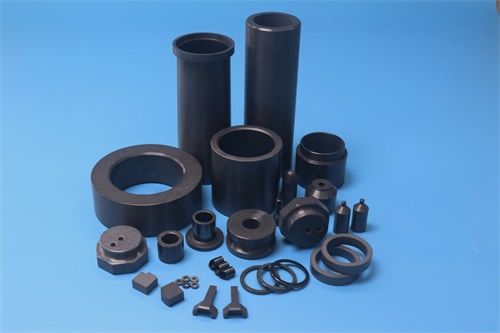
Mechanical industry: Silicon nitride ceramics are used as key components such as bearing balls, rollers, molds, and new ceramic cutting tools, improving the wear resistance and service life of mechanical components.
Chemical industry: In the chemical industry, silicon nitride ceramics are used as wear-resistant and corrosion-resistant components, such as ball valves, pump bodies, combustion vaporizers, filters, etc., effectively preventing corrosion and leakage of chemical media.
Metallurgical industry: In the metallurgical industry, silicon nitride ceramics are used to make cutting core rods, extrusion molds, wire drawing molds, as well as work molds such as rolling rolls and conveyor rolls, which improve the production efficiency and product quality of metallurgical equipment.
Aerospace: In the aerospace field, silicon nitride ceramics are widely used as manufacturing materials for key components, such as engine parts and combustion chamber liners, which improve the performance and reliability of spacecraft.
Automotive industry: With the rise of electric and hybrid vehicles, silicon nitride ceramics are widely used in fields such as turbochargers and brake systems due to their lightweight, high strength, and high temperature resistance, which helps improve fuel efficiency and driving safety.
Electronic industry: Silicon nitride ceramics are widely used in semiconductor devices, power modules, capacitors, as well as electrical equipment such as transformers, switchgear, and motors due to their excellent electrical insulation properties, ensuring the safety and reliability of the equipment.
With the continuous advancement of materials science and preparation technology, the performance of silicon nitride ceramics will be further optimized, and the application fields will also continue to expand. For example, through nanotechnology modification, customized performance of silicon nitride ceramics can be achieved to meet a wider range of industry demands. At the same time, the research and development of green and low-cost preparation processes will promote the popularization and application of silicon nitride ceramics in more fields, promote industrial upgrading and technological innovation.
Silicon nitride ceramics play an irreplaceable role in multiple industrial fields due to their excellent performance.
CATEGORIES
LATEST NEWS
- What are the mechanical pro...
- Thermal properties of zirco...
- What properties should be c...
- What are the mechanical pro...
- What are the main advantage...
- What is Macor processable g...
- The material properties and...
- The reason for the high pri...
- What are the preparation me...
- Why modify aluminum nitride...