
Application of Zirconia Ceramics in Iron Metallurgy Industry
Zirconia (ZrO2) ceramics have become a key material in solving extreme wear and corrosion problems in the iron metallurgy industry due to their excellent fracture toughness, extremely high wear resistance, and outstanding high temperature resistance. From high-temperature molten metal flow control components to sensor protection tubes in harsh environments, zirconia ceramics are gradually replacing traditional refractory materials and alloy components, significantly improving the operating life, accuracy stability, and production safety of metallurgical equipment, and helping steel enterprises achieve cost reduction, efficiency improvement, and intelligent upgrading.
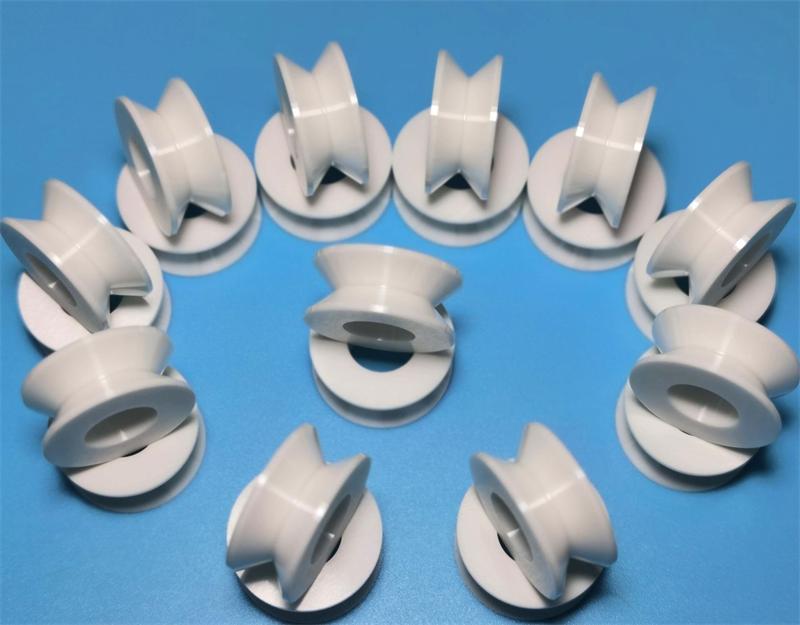
What can it solve for you?
Q1: The temperature at the metallurgical site is extremely high and accompanied by severe thermal shock. Ordinary ceramics are prone to explosion. Can zirconia withstand it?
A: Absolutely possible. Zirconia ceramics possess a rare “phase transition toughening” mechanism among ceramic materials, with fracture toughness 3-5 times that of alumina ceramics. They have excellent thermal shock resistance and can effectively resist rapid cooling and heating from room temperature to over 1000 ^ circ C without catastrophic cracking.
Q2: Our guide plate and nozzle wear out too quickly, resulting in unstable product dimensions and frequent replacement. Is there a solution?
A: Yes, it is. Zirconia has a hardness second only to diamond and silicon carbide, but it has better toughness and is less prone to edge breakage. As a guide plate or nozzle, its wear resistance life is usually 5-10 times that of hard alloy, which can maintain stable flow channel size for a long time and ensure consistent accuracy of rolled materials or castings.
Q3: In high-temperature melts, we need to accurately measure temperature and oxygen content. What should we do if traditional protective tubes are prone to corrosion and contamination of molten steel?
A: Zirconia has extremely stable chemical properties and strong corrosion resistance to molten steel, slag, and acidic gases. Used as a thermocouple protection tube or oxygen probe sleeve, it can protect the sensor without introducing impurities into the steel water, ensuring the authenticity and reliability of measurement data.
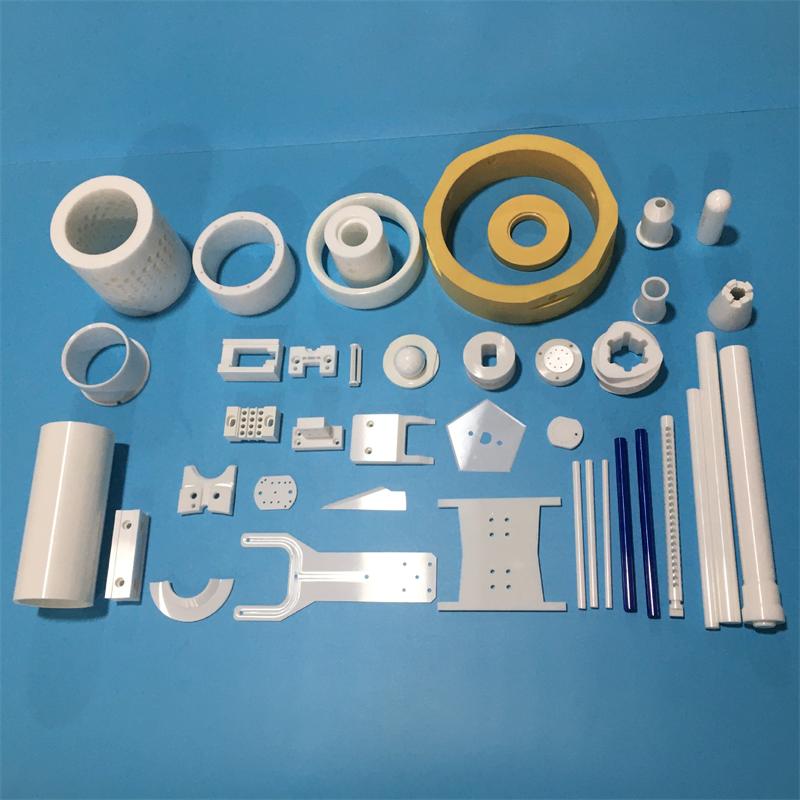
How does zirconia reshape the iron metallurgy process?
Core product application scenarios
In the entire process of iron metallurgy, zirconia ceramics are mainly used in the following key links:
Continuous casting and refining process: Immersion nozzle (partially composite), oxygen/temperature probe protection tube, long nozzle lining.
Steel rolling production line: high-speed wire guide plate, cutting wheel, wear-resistant nozzle, roller bearing.
High temperature sensing and control: thermocouple insulation tube, level gauge float, valve sealing ring inside the high-temperature furnace.
Mineral processing: slurry pump sealing ring, cyclone liner (for high abrasive mineral powder).

Irreplaceable product advantages (Key Advantages)
High Toughness: Unique tetragonal to monoclinic martensitic phase transition, capable of absorbing crack propagation energy, preventing brittle fracture, and adapting to mechanical impacts in metallurgical sites.
Superior Wear Resistance: With a Vickers hardness of 1200-1400 HV, it significantly reduces equipment clearance caused by wear and extends maintenance cycles.
Low Thermal Conductivity&Shock Resistance: With low thermal conductivity, it can serve as an excellent thermal barrier; The temperature difference for thermal shock resistance can reach Delta T>400 ^ circ C.
Chemical inertness: does not wet or react with molten iron or slag, avoiding “hanging steel” or component contamination.
Excellent electrical performance: It has ion conductivity at high temperatures (used for oxygen sensors) and is an excellent insulator at room temperature.
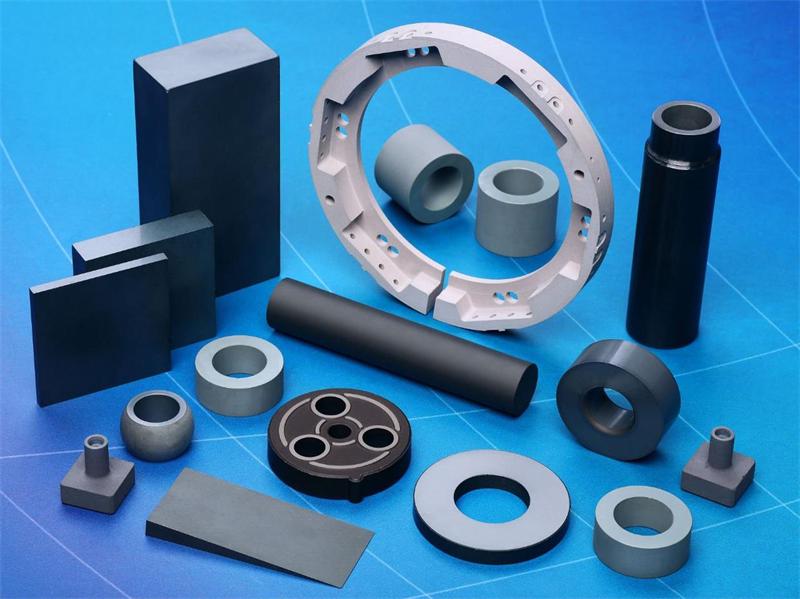
Comprehensive Customization Solutions
For the special working conditions of the metallurgical industry, we provide in-depth customization:
Material formula customization: We provide various formulas such as 3Y-TZP (high-strength), 4Y-PSZ (high toughness), and magnesium stabilized zirconia to match different temperature and stress scenarios.
Complex structure molding: It supports isostatic pressure molding, injection molding and gel injection molding, and can manufacture complex parts with internal threads, profiled runners, and thin-walled structures.
Precision machining services: We provide precision grinding within the outer diameter range of Phi 1mm to Phi 500mm, with tolerances up to IT6 level. The surface can be polished or sandblasted.
Metal ceramic composite: provides metalized sealing services for zirconia with stainless steel and heat-resistant steel, solving installation and connection problems.
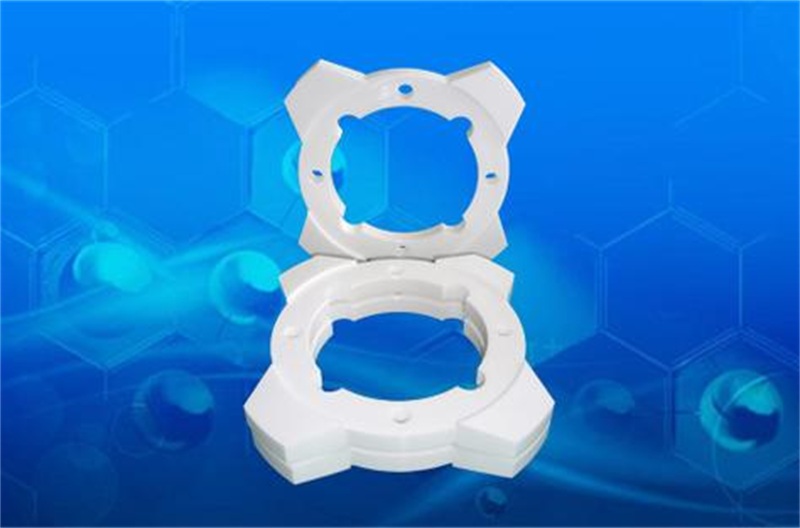
What specific production challenges are being solved?
Resolve ‘unplanned downtime’: reduce the frequency of replacing vulnerable parts from ‘once a week’ to ‘once a quarter’.
Resolve “product quality fluctuations”: eliminate defects such as steel size deviation and surface scratches caused by component wear.
Addressing “data distortion”: preventing sensor protection tubes from being eroded and penetrated, ensuring precise feedback from temperature and oxygen control systems.
Addressing ‘safety hazards’: Avoiding the risk of explosion or splashing caused by sudden peeling and falling of traditional refractory materials into the ladle.
Customer Application Cases (Case Studies)
Case 1: Upgrade of high-speed wire guide system in a large special steel plant
Customer demand: When producing high-strength alloy steel wire, the original tungsten carbide (WC) guide plate has an average service life of only 48 hours in high-speed friction and high-temperature oxidation environments. Frequent shutdowns and replacement not only affect production, but also result in dimensional fluctuations caused by wear and tear, leading to a defect rate of up to 3%.
Solution: We have customized a high toughness zirconia (4Y-PSZ) composite guide plate for it. By utilizing the high-temperature hardness and self-lubricating properties of zirconia, an optimized streamlined guide groove was designed, and a special metal backing was used to enhance installation strength.
Final effect: The new guide board has a continuous service life of over 600 hours (increased by more than 12 times), and its size remains almost unchanged throughout its lifecycle. The CPK value of wire size accuracy remains stable above 1.67, and the defect rate drops below 0.2%. According to estimates, the production line saves over 1.5 million yuan in spare parts costs and downtime losses annually.
Case 2: Improvement of oxygen probe protection tube for converter steelmaking in a certain steel group
Customer demand: In the endpoint control of converter steelmaking, the original quartz or ordinary corundum protective tube has a too fast erosion rate in 1650 ^ circ C high-temperature molten steel, and sometimes it is damaged before the measurement is completed, resulting in measurement failure or data lag, which affects the steelmaking decision.
Solution: Use high-purity magnesium stabilized zirconia to make the front end of the protective tube. By utilizing its extremely low wettability to molten steel and slag at high temperatures, and coating the inner wall of the tube with a special anti-oxidation coating, the sensor ensures stable operation in extreme environments.
Final effect: The measurement success rate has increased from 92% to 99.8%, and the response time for a single measurement has been shortened by 2 seconds, achieving more accurate endpoint carbon and oxygen control. This not only reduces the number of repeated blowing, but also reduces the alloy consumption per ton of steel by about 1.5 kilograms, with significant economic benefits.
Faced with increasingly stringent metallurgical production environments and pressure to reduce costs and increase efficiency, zirconia ceramics are not only the upgrade of materials, but also the key to process optimization.
Contact us immediately for professional solutions! Whether you need standard wear-resistant spare parts or non-standard customization for special working conditions, our technical team will provide you with free working condition evaluation and selection guidance.
Brudeze Ceramics supplies and sells a wide range of high-quality quartz glass, including alumina ceramics, zirconia ceramics, silicon nitride ceramics, aluminum nitride ceramics, silicon carbide ceramics, boron carbide ceramics, bioceramics, machinable ceramics, etc. We can meet the customization requirements of various ceramic products.
Tags: boron carbide ceramics
PREVIOUS:Application of Zirconia Ceramics in Automation Systems
NEXT:Application of Zirconia Ceramics in Petrochemical Industry
CATEGORIES
LATEST NEWS
- High temperature resistant ...
- High grinding zirconia cera...
- Pollution free zirconia cer...
- High purity zirconia cerami...
- Low wear zirconia ceramic b...
- High hardness zirconia cera...
- High density zirconia ceram...
- Electric field sintering zi...
- Magnetic field sintering zi...
- Activated sintered zirconia...